Electronic components can be seen everywhere in our life, and with the development of science and technology, the variety of electronic components has become more and more, but also began to be high-frequency, miniaturization of the direction of development. Today I bring you the five characteristics of electronic components, let's learn about them.
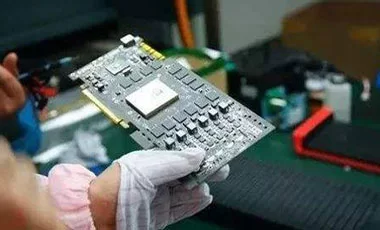
Five characteristics
1. Many product categories, a variety of complex. Only according to the former Ministry of Electronics, the preparation of electronic products classification and coding statistics, electronic components in addition to integrated circuits, there are 206 categories of products 2519 subcategories, including 13 categories of electrical vacuum devices 260 subcategories; semiconductor discrete devices (including laser, optoelectronic devices, etc.) 18 categories 379 subcategories; electronic components 17 professional, 161 categories 1284 subcategories. Electronic materials have 14 major categories and 596 subcategories.
2. It is a highly professional and multidisciplinary collection. There are great differences in production processes and production equipment, testing techniques and equipment. This is not only the difference between electric vacuum devices, semiconductor devices, and electronic components but also the difference between the main categories and even sub-categories of each industry. For example, different display devices, and different components, i.e. different capacitors, resistors, and sensitive components are also different. Of course, similar products at different stages require different production techniques and methods, therefore, electronic components have a production line, a generation of component products is a generation of production lines; some professional production of multilayer printed circuit board enterprises need to add new equipment every year.
3. Complete sets and into series. This is determined by the electronic circuit of the whole machine, band and frequency characteristics, precision, function, power, storage and use of the conditions and environment, and service life of the requirements.
4. The investment intensity varies widely, and varies greatly from period to period, especially in terms of production scale, product output, production conditions, and production environment requirements. Among them, high-tech, the need for large-scale production of products investment scale than the “eight five” period increased by an order of magnitude, often reaching 100 million U.S. dollars, the lowest is 50 million U.S. dollars; for other products, although the technical difficulty is also high, the output is limited, the degree of automation of equipment is low, the investment intensity is much smaller.
5. Each electronic component and its industry has its own different development pattern, but they are closely related to the development of electronic machinery and systems, including the development of electronic technology, the entire structure, and electrical assembly technology. However, in terms of industrial development, electronic equipment, and the entire machine system or a variety of electronic components between the existence of mutual promotion and mutual constraints.
-20251124061922.webp "New Energy Vehicle Charging Pile PCBA")