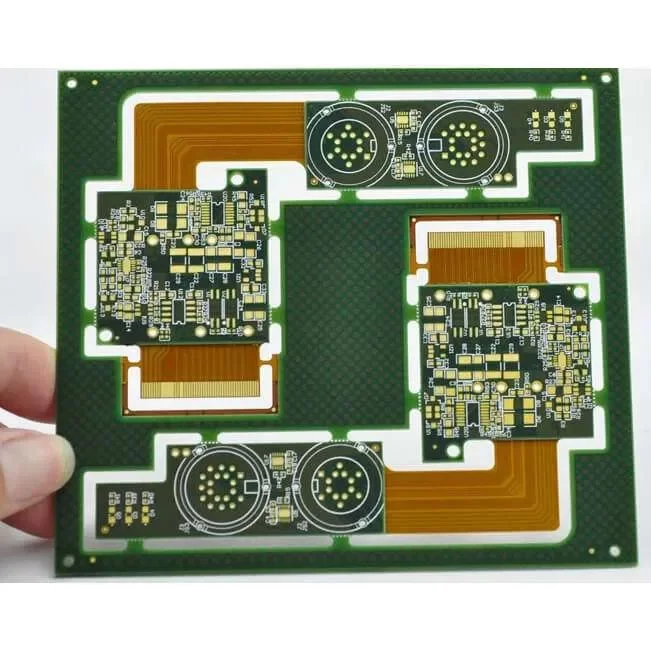
Selecting a reliable PCB Manufacturer is a critical decision that determines the ultimate reliability and performance of any electronic device. From the intricate circuits in medical implants to the robust controllers in automotive systems, the quality of the printed circuit board serves as the foundation for all hardware innovation. Understanding the nuances of fabrication ensures that designers can translate their theoretical schematics into functional, market-ready products.
In today's hyper-connected era, the demand for miniaturization and high-speed data transmission has pushed a professional PCB Manufacturer to adopt advanced technologies like HDI and Rigid-Flex designs. As global industries pivot toward IoT and 5G, the precision of the manufacturing process directly impacts signal integrity and thermal management, making the choice of a production partner a strategic business move rather than a simple procurement task.
By analyzing the technical capabilities, certifications, and material sourcing of a PCB Manufacturer, companies can significantly reduce their time-to-market and minimize costly redesigns. This guide explores the global landscape of PCB fabrication, providing the insights necessary to navigate the complexities of modern electronic assembly and material selection for maximum efficiency.
Global Industry Context of PCB Manufacturing
The global electronics landscape is heavily reliant on the capacity of a high-tier PCB Manufacturer to maintain tight tolerances. With the worldwide semiconductor market continuing to expand, the demand for complex substrates has surged. ISO 9001 standards and IPC guidelines now dictate the baseline for quality, as the cost of failure in critical sectors—such as aerospace or medical electronics—can be catastrophic.
Currently, the industry faces a significant challenge in balancing rapid prototyping with mass production scalability. Many companies struggle to find a partner that can handle a transition from a small batch of prototypes to millions of units without compromising the signal integrity or structural durability of the boards. This gap in the supply chain often leads to delays in product launches and increased operational costs.
Defining the Role of a Modern PCB Manufacturer
In simple terms, a PCB Manufacturer is a specialized entity that transforms an electrical design—represented by Gerber files—into a physical board that supports and connects electronic components. This process involves complex chemical etching, drilling, and plating, creating the conductive pathways that allow electricity to flow precisely where it is needed.
Beyond mere fabrication, a modern manufacturer acts as a technical consultant. They assist engineers in optimizing their designs for manufacturability (DFM), ensuring that the chosen trace widths, via sizes, and material stacks are not only theoretically sound but can be produced consistently and cost-effectively at scale.
This role is indispensable to humanitarian and industrial progress. Whether it is creating low-cost diagnostic tools for remote healthcare or developing energy-efficient controllers for smart grids, the ability of a PCB Manufacturer to innovate with materials like ceramic or flexible substrates allows technology to reach environments that were previously inaccessible.
Key Technical Factors for Quality Fabrication
Material selection is the first pillar of excellence for any PCB Manufacturer. Depending on the application, one might choose standard FR4 for consumer goods, Rogers materials for high-frequency RF applications, or specialized Ceramic PCBs for extreme thermal environments. The choice of substrate directly affects the dielectric constant and the board's ability to withstand heat.
Precision in drilling and plating is where a top-tier PCB Manufacturer distinguishes itself. The use of laser drilling for micro-vias in HDI (High-Density Interconnect) boards allows for smaller footprints and faster signal speeds. This is critical for modern smartphones and wearable tech where space is at a premium.
Finally, the implementation of rigorous testing protocols, such as Automatic Optical Inspection (AOI) and Electrical Testing (E-test), ensures that every unit leaving the PCB Manufacturer is defect-free. This reliability is what builds long-term trust between the fabricator and the OEM, reducing the risk of field failures and recalls.
Global Applications and Use Cases
The versatility of a PCB Manufacturer is evident in the diverse range of sectors they serve. In the automotive industry, the shift toward Electric Vehicles (EVs) has created a massive demand for Motor Power PCB Assembly and high-voltage boards that can handle immense current while remaining compact. These boards must endure extreme vibrations and temperature swings.
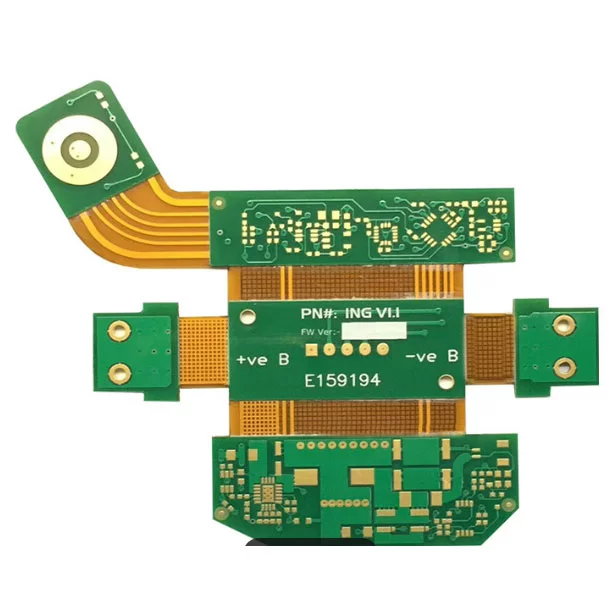
In the medical field, specialized PCB Manufacturer services provide the precision needed for life-saving equipment. For example, in remote industrial zones or post-disaster relief operations, portable medical diagnostic tools rely on Flex PCB and FPC Assembly to fit into handheld, ruggedized enclosures that can withstand harsh environmental conditions.
Comparative Performance of PCB Manufacturing Methods
Long-Term Value and Reliability Advantages
Partnering with an experienced PCB Manufacturer provides more than just hardware; it provides peace of mind. The logical benefit is a reduction in total cost of ownership (TCO), as boards designed for reliability have fewer failures in the field. When a manufacturer utilizes high-grade materials and precise assembly, the resulting product enjoys a longer lifecycle and lower maintenance requirements.
From an emotional perspective, reliability translates to trust and safety. For an engineer, knowing that their PCB Manufacturer adheres to strict quality control means the difference between a successful product launch and a brand-damaging recall. This trust is the foundation of innovation, allowing companies to push the boundaries of what is possible in electronics without fearing catastrophic failure.
Future Trends in PCB Innovation
The future of the PCB Manufacturer is inextricably linked to sustainability. We are seeing a shift toward "Green PCBs," utilizing biodegradable substrates and lead-free soldering processes to reduce the environmental impact of electronic waste. Digital transformation is also integrating AI into the fabrication process to predict defects before they occur.
Another major trend is the rise of 3D-printed electronics. While traditional etching remains dominant, some forward-thinking PCB Manufacturer labs are experimenting with additive manufacturing. This allows for the creation of non-planar circuits, enabling electronics to be embedded directly into the structural components of a device.
Furthermore, the integration of IoT and 6G will require boards with even higher frequency capabilities. This will drive the adoption of advanced materials like LCP (Liquid Crystal Polymer) and a deeper reliance on specialized PCB Manufacturer expertise to manage parasitic capacitance and signal loss at microwave frequencies.
Common Challenges and Expert Solutions
One of the most common hurdles for clients of a PCB Manufacturer is the "Prototype-to-Production Gap." Often, a design that works in a small lab setting fails when scaled to thousands of units due to manufacturing variances. The solution lies in early DFM (Design for Manufacturing) collaboration, where the manufacturer reviews the design to identify "high-risk" areas before the first board is even etched.
Thermal management is another persistent challenge. As components get smaller and more powerful, heat dissipation becomes a critical failure point. Expert PCB Manufacturer solutions include the use of metal-core PCBs (MC PCBs) or embedded copper coins to draw heat away from critical components, ensuring the device doesn't throttle or burn out.
Finally, supply chain volatility can disrupt production schedules. To overcome this, leading PCB Manufacturer entities are implementing "buffer stock" strategies for common substrates and diversifying their raw material sources. This ensures that clients receive their orders on time, regardless of global geopolitical shifts or material shortages.
Technical Comparison of PCB Manufacturing Material Performance
| Material Type | Thermal Conductivity | Signal Integrity | Cost Efficiency |
|---|
| Standard FR4 | Low | Moderate | High (10/10) |
| Rogers / PTFE | Moderate | Excellent | Low (4/10) |
| Aluminum Core | High | Moderate | Moderate (7/10) |
| Ceramic (Alumina) | Very High | High | Very Low (2/10) |
| Polyimide (Flex) | Moderate | High | Low (5/10) |
| High-Tg FR4 | Moderate | Moderate | High (8/10) |
FAQS
When selecting a PCB Manufacturer, prioritize certifications (such as ISO 9001, UL, or IATF 16949 for automotive), their ability to handle your specific complexity (e.g., HDI or Rigid-Flex), and their track record for lead-time accuracy. Additionally, look for providers who offer comprehensive DFM services to help reduce redesign costs.
A professional manufacturer typically uses different lines for these stages. Prototyping focuses on speed and flexibility, often using subtractive processes with faster turnaround. Mass production utilizes fully automated panels, AOI inspection, and optimized chemical baths to ensure consistency and lower per-unit costs across millions of boards.
Yes, by utilizing HDI (High-Density Interconnect) technology. A skilled PCB Manufacturer can implement blind and buried vias and thinner trace widths, allowing more components to be packed into a smaller area without sacrificing electrical performance or signal integrity.
Rigid-Flex boards combine the stability of traditional PCBs with the flexibility of FPCs. This eliminates the need for bulky connectors and cables, reducing the overall weight and volume of the device. It is highly valued in medical implants and aerospace applications where space is extremely limited.
Many modern manufacturers now offer RoHS (Restriction of Hazardous Substances) compliant processes. You can request lead-free soldering, the use of halogen-free laminates, and a commitment to closed-loop water filtration systems to minimize the environmental footprint of your hardware production.
Turnaround times vary wildly. Quick-turn prototypes can be produced in 24 to 72 hours. Standard production runs typically take 1 to 3 weeks, depending on the number of layers, the complexity of the plating, and the current queue of the facility. Logistics and customs can add additional time for international shipments.
Conclusion
In summary, the role of a PCB Manufacturer extends far beyond the physical production of boards; it is a partnership in engineering excellence. By integrating high-quality materials, precision fabrication techniques like HDI, and rigorous testing standards, manufacturers ensure that the electronic heart of a product is resilient, efficient, and scalable. From selecting the right substrate to optimizing for thermal management, every decision made during the fabrication process directly influences the success of the end product in the global market.
Looking ahead, the industry will continue to evolve toward greater sustainability and higher integration, with additive manufacturing and green chemistry leading the way. For businesses aiming to innovate in the IoT, automotive, or medical sectors, investing in a relationship with a technologically advanced PCB Manufacturer is the most effective way to future-proof their hardware. We encourage you to prioritize quality and technical synergy to achieve long-term reliability. Visit our website: www.hubcircuits.com