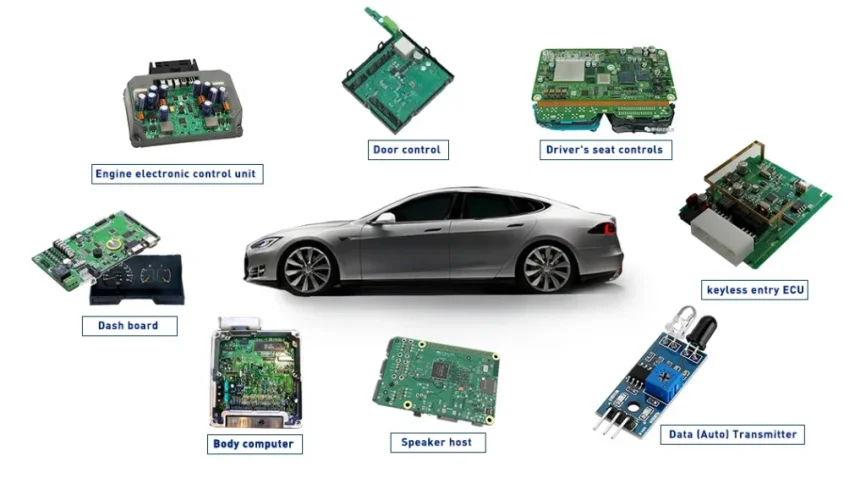
In the landscape of modern and advanced electronics, the industrial control PCB has emerged as the central nervous system of global technology. As industries move toward total automation and high-precision operations, these boards have evolved far beyond simple interconnects. Today, a control pcb is a sophisticated intelligence center, driving everything from autonomous automotive systems and consumer gadgets to the most complex industrial robotics.
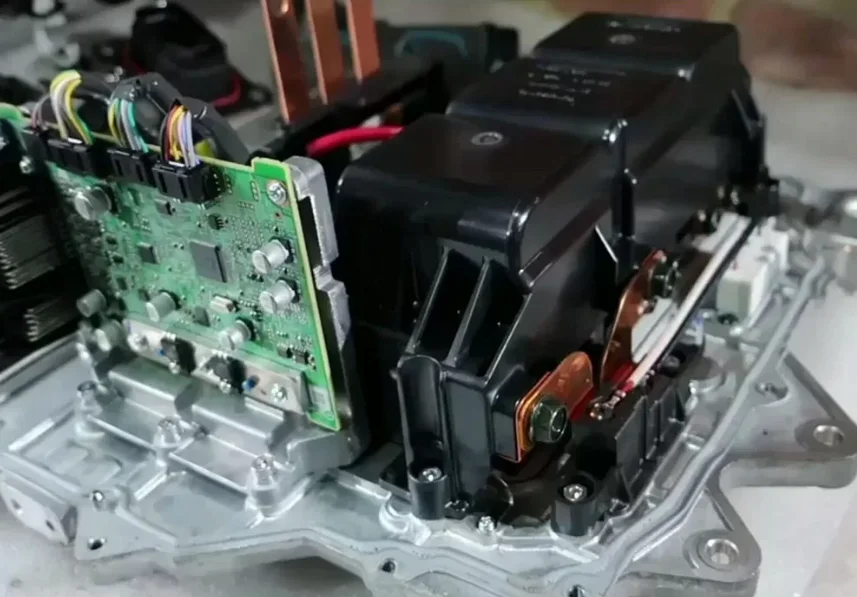
What is a Control PCB?
A control pcb is the "intelligence layer" of an electronic system. While a traditional PCB might only provide a physical platform for electrical connections, a pcb control board is specifically engineered to manage, process, and execute the logic of the entire circuit.
These boards are typically populated with microcontrollers (MCUs), digital signal processors (DSPs), and various Input/Output (I/O) interfaces. The primary mission of an industrial control PCB is to handle signal processing, data computation, and real-time decision-making. Essentially, it translates user or sensor inputs into mechanical or electrical actions.
The Structural Architecture of a Control PCB
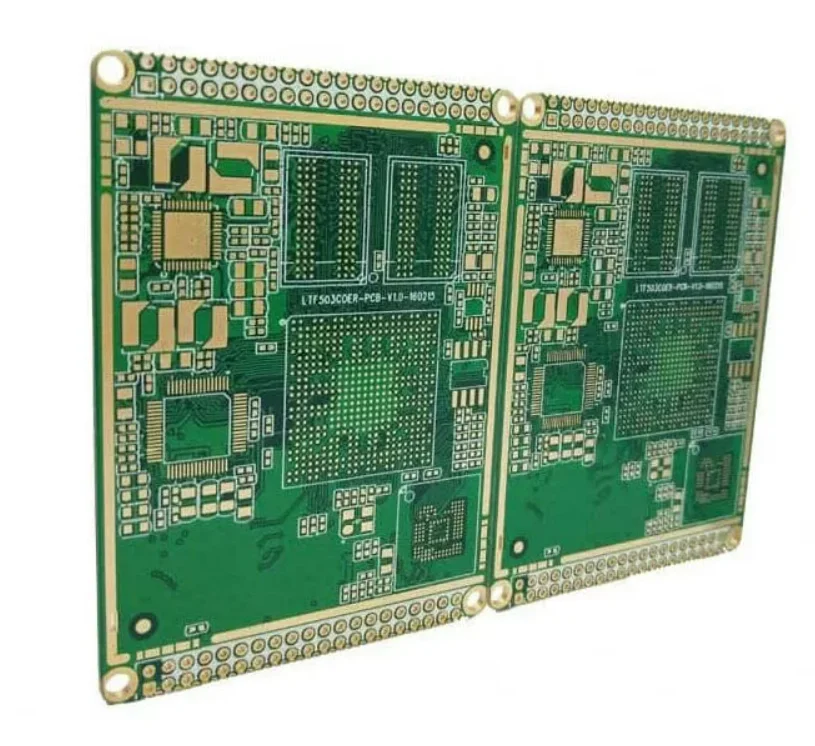
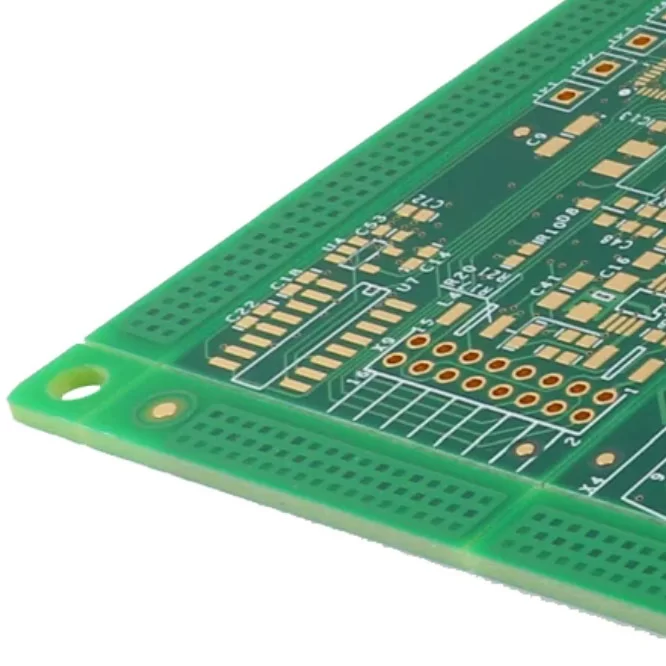
The reliability of a control board pcb begins with its physical composition. Leading manufacturers focus on high-grade materials to ensure these boards can survive harsh industrial environments.
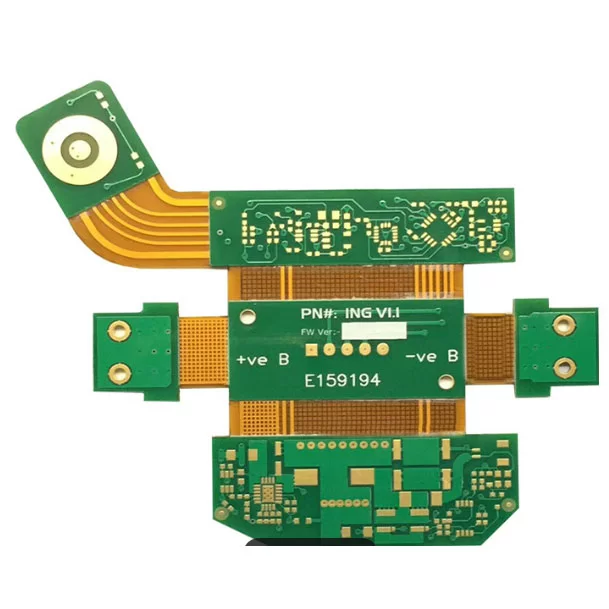
Substrate (Base Material): The most common foundation is FR-4, though high-frequency laminates or polyimide-based flexible materials are utilized for specialized applications.
Copper Layers: These serve as the high-speed highways for logic signals. In a controller pcb, the precision of these conductive pathways is critical to maintaining signal timing and reducing resistance.
Solder Mask: Usually a green (or custom-colored) protective coating, the mask insulates the copper layers and prevents accidental bridges or short circuits during the industrial control pcb assembly process.
Silkscreen: This acts as the "technical map" of the board, labeling reference designators for resistors, capacitors, and integrated circuits (ICs) to facilitate easy maintenance and testing.
Processing Units: The heart of the board, where microprocessors or MCUs execute the embedded control logic.
Classifying the Types of Control PCBs
Not all control pcb units are created equal. They are often categorized by their programming capability and circuit type:
One-Time Programmable (OTP): These boards are programmed once during the design or manufacturing phase and operate on that fixed logic for their entire lifecycle.
Processing Unit-Based: These utilize advanced microcontrollers or microprocessors, allowing for firmware updates and complex multi-tasking.
Analog Control PCBs: Often found in power regulation, these use operational amplifiers and analog-to-digital converters (ADCs) to manage continuous signal feedback.
Digital Control Circuits: These rely on logic gates, counters, and converters to process discrete, binary information—common in modern computing and communication.
Custom Integrated Solutions: High-end manufacturers offer compact, customized boards that integrate sensors and power management directly onto a single controller pcb.
Control PCB vs. Power PCB: Understanding the Difference
In many systems, you will find both a pcb control board and a pcb power control board. While they sound similar, they serve vastly different roles:
Feature | Control PCB | Power PCB / Power Control Board |
Primary Goal | Logic and Signal Processing | Energy and Power Distribution |
Operating Voltage | Low (typically 3.3V, 5V, or 12V) | High (24V to over 100V+) |
Current Levels | Measured in Milliamps (low heat) | Measured in Amperes (high heat) |
Key Components | MCUs, Sensors, Logic Gates | MOSFETs, IGBTs, Transformers |
Design Focus | Signal Integrity & Noise Immunity | Thermal Dissipation & Current Capacity |
Critical Design Guidelines for Control PCBs
Designing a pcb control board requires a focus on "clean" signals. Because these boards process delicate logic, even minor interference can cause system-wide failures.
1. Analog and Digital Isolation
The gold standard in control pcb design is keeping sensitive analog inputs far away from "noisy" digital switching circuits. This physical separation prevents digital "crosstalk" from corrupting sensor data.
2. Solid Ground Planes
Using internal ground planes is essential for reducing Electromagnetic Interference (EMI). A solid plane provides a low-impedance return path for signals, which is vital for the high-speed communication protocols used in industrial automation.
3. Precision Trace Widths
Trace widths must be meticulously calculated, especially for communication buses like CAN bus, Ethernet, or RS-485. This ensures the electrical characteristics of the trace support the required data rates without signal degradation.
4. Advanced Thermal Management
While low-power logic doesn't generate the heat of a motor driver, high-performance processors can create "hotspots." Designers use thermal vias and localized copper pours to pull heat away from critical ICs.
The Industrial Control PCB Manufacturing Process
The manufacturing of an industrial control PCB follows a high-precision workflow to ensure the final product can operate 24/7 without failure.
Imaging: Digital Gerber files are converted into physical patterns on copper-clad laminates using photoresist and UV exposure.
Etching: A chemical bath removes unwanted copper, leaving behind the precise traces designed to carry the control logic.
High-Speed Drilling: CNC machines create holes for through-hole components and vias. In complex controller pcb designs, these vias are the primary means of connecting multiple layers.
Plating: A chemical process deposits a thin layer of copper into the drilled holes, creating the electrical "bridges" required for multilayer connectivity.
The Assembly Process: Bringing the Board to Life
Industrial control PCB assembly is the stage where components are physically bonded to the board.
Solder Paste Stenciling: A stainless steel stencil is used to apply solder paste only to the pads where components will be placed.
Automated Pick and Place: Robotic systems place surface-mount devices (SMD) and microchips with surgical precision.
Reflow Soldering: The board passes through a multi-zone oven that melts the solder, creating permanent mechanical and electrical bonds.
Rigorous Testing: Quality assurance is paramount. Manufacturers use AOI (Automated Optical Inspection) to check for placement errors and ICT (In-Circuit Testing) to verify the electrical logic flow.
Applications of Control PCBs
From the depths of the ocean to the vacuum of space, the control pcb is everywhere:
Smart Devices: Acts as the brain for IoT gadgets and smart home hubs.
Defense & Aerospace: Used in UAVs (drones), guidance systems for advanced weaponry, and satellite command centers.
Industrial Automation: Powers the PLCs and sensor hubs that run modern factory floors.
Space Technology: Facilitates data processing and communication in satellites and ground stations.
Challenges and Future Trends Of Control PCB Fabrication
The primary challenge in control pcb fabrication is the push for miniaturization. As devices get smaller, fitting complex logic into tiny footprints increases the risk of signal noise and thermal issues. Furthermore, industrial boards must prove their durability against extreme vibration, humidity, and temperature swings.
Future Directions:
HDI and mSAP: High-Density Interconnect (HDI) and Modified Semi-Additive Processes (mSAP) are allowing for ultra-fine circuit patterns, making boards smaller and more powerful than ever.
Flexible Electronics: The rise of flexible and stretchable materials allows the controller pcb to be integrated into wearable medical tech or irregular industrial housings.
Embedded AI: Future control boards will move beyond simple logic, incorporating AI chips to perform edge computing directly on the factory floor.
Conclusion
The industrial control PCB is the essential bridge between human intent and mechanical execution. Whether it is a simple home appliance or a high-stakes defense machine, the reliability of the system depends on the quality of the pcb control board. By prioritizing signal integrity, thermal management, and advanced assembly techniques, engineers can ensure their projects achieve long-term performance and stability in any environment.
Choosing a trustworthy manufacturing partner is not just about getting a board—it’s about ensuring the heart of your technology never skips a beat.
-20251124061922.webp "New Energy Vehicle Charging Pile PCBA")