In the rapidly evolving landscape of modern electronics, the push for miniaturization and high-speed performance has made the design of Printed Circuit Boards (PCBs) more challenging than ever. As components shrink and frequencies rise, traditional single-layer or double-layer boards often fall short of meeting signal integrity and power distribution requirements. This is where the 4-layer PCB becomes the industry standard, providing a sophisticated balance between complexity, cost-effectiveness, and electrical performance.
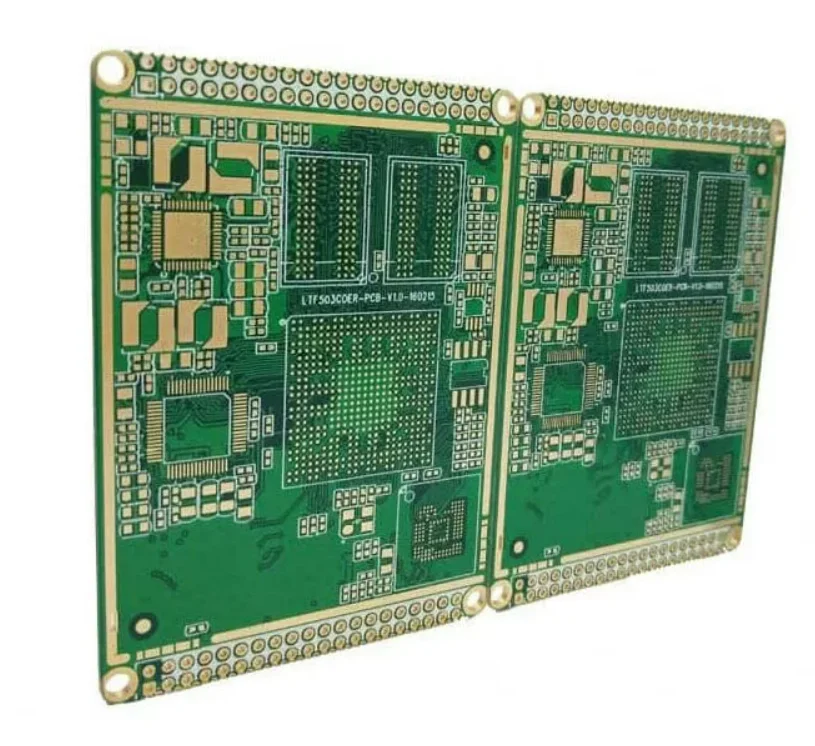
What is a 4 Layer PCB?
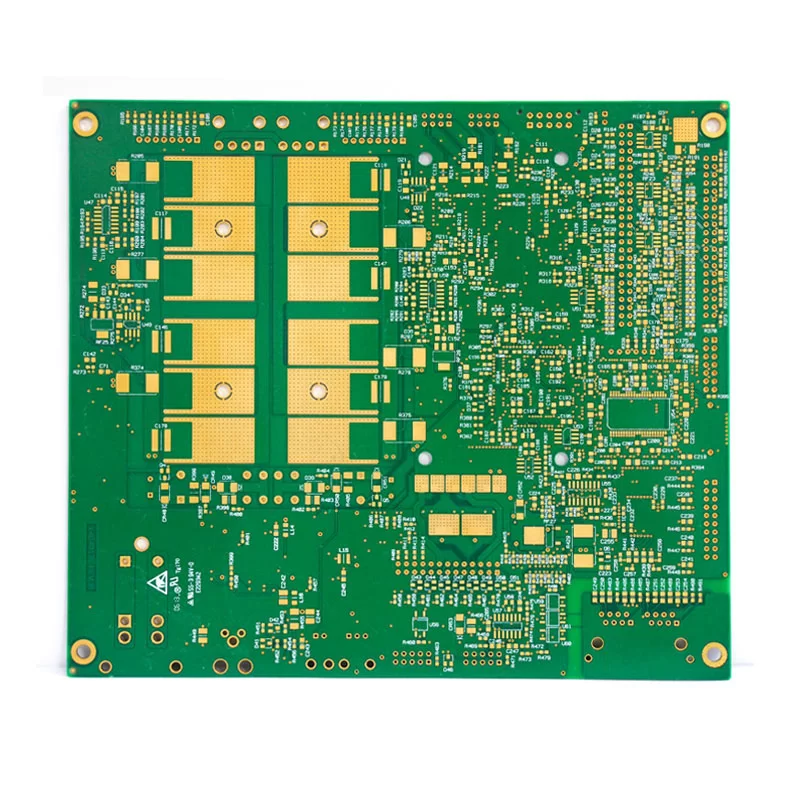
A 4-layer PCB is a multilayer circuit board consisting of four distinct conductive copper layers. Unlike simpler boards, these layers are strategically laminated together with insulating dielectric materials (prepreg and core) to create a cohesive, high-performance unit.
While a 2-layer board only has top and bottom copper, a 4-layer board introduces two internal layers. In a typical configuration, these internal layers are dedicated to Power and Ground planes. This structural shift provides a significant leap in performance, offering:
Greater Routing Density: More "real estate" to move signals without creating congestion.
Superior EMI Shielding: Internal planes act as a barrier against electromagnetic interference.
Robust Power Distribution Networks (PDN): Lower impedance for power delivery, which is critical for modern microprocessors.
4 Layer PCB Stackup Explained
The "stackup" refers to the arrangement of copper and insulating layers that make up the board. A well-designed stackup is the foundation of a stable circuit. The standard 4-layer PCB stackup is typically organized as follows:
Top Layer (Layer 1): Signal layer (Copper Foil).
Dielectric (Prepreg): Insulating material that bonds the layers.
Inner Layer 2: Usually a Ground Plane (Copper Core).
Inner Layer 3: Usually a Power Plane (Copper Core).
Dielectric (Prepreg): Insulating material.
Bottom Layer (Layer 4): Signal layer (Copper Foil).
The Lamination Process
The entire stack is compacted in a single lamination press cycle. The internal layers (2 and 3) are etched onto a central rigid core first. Then, the outer copper foils are bonded to this core using sheets of prepreg under high heat and pressure.
Non-Standard Stackups
While the signal-ground-power-signal configuration is standard, exceptions exist:
Sequential Lamination: Used when the design requires blind or buried vias, necessitating multiple press cycles.
Inverted Stackups: Some high-speed designs might place signals on internal layers and planes on the outside for specific shielding needs.
Back-Drilling: In ultra-high-speed designs (e.g., 25Gbps+), manufacturers may drill out the "stubs" of copper vias to prevent signal reflections.
How Are 4 Layer PCBs Manufactured?
Manufacturing a 4-layer board is a high-precision process that requires controlled environments and advanced machinery. The workflow generally follows these stages:
1. Internal Layer Processing
Before the board becomes a "sandwich," the internal core (Layers 2 and 3) is imaged and etched. This creates the power and ground distributions. Because these layers will be buried, they must be inspected using AOI (Automated Optical Inspection) at this stage; once laminated, they cannot be corrected.
2. Lay-up and Lamination
The etched core, prepreg, and outer copper foils are stacked. This "sandwich" is placed into a lamination press. Under intense heat and vacuum, the prepreg resin melts and flows, bonding the layers into a single, solid panel.
3. Drilling and Metallization
Holes are drilled through the panel to create vias, which allow electrical signals to travel between layers. These holes are then chemically plated with copper (metallization) to ensure conductivity between the different copper levels.
4. Outer Layer Imaging
The top and bottom copper foils are now etched to create the visible signal traces. This is followed by the application of a Solder Mask (to protect the copper) and a Silkscreen for component labeling.
5. Surface Finish
To prevent the exposed copper from oxidizing, a surface finish is applied. Common choices include:
HASL (Hot Air Solder Leveling): Cost-effective and reliable for through-hole components.
ENIG (Electroless Nickel Immersion Gold): Provides a flat surface, ideal for fine-pitch Surface Mount Technology (SMT) components and superior shelf life.
Design Considerations for 4 Layer PCBs
Designing a 4-layer board isn't just about adding more wires; it’s about managing electrical physics. Engineers must focus on several key parameters:
1. Return Paths and Loop Areas
Every signal needs a return path to its source. In a 4-layer board, high-speed signals on the top layer "look" for their return path on the adjacent ground plane. Designers must ensure the ground plane is continuous. If a signal crosses a split in the plane, it creates a large loop area, which acts as an antenna for electromagnetic interference (EMI).
2. Component Placement and Decoupling
Decoupling capacitors are the energy reservoirs for Integrated Circuits (ICs). In 4-layer designs, these should be placed as close as possible to the power pins, with vias dropping directly into the internal power and ground planes to minimize inductance.
3. Controlled Impedance
For high-speed interfaces like USB 3.0, HDMI, or PCIe, the trace width and the distance to the reference plane (dielectric thickness) must be calculated precisely. This ensures the signal sees a consistent impedance, preventing data corruption caused by reflections.
4. Via Strategy
Vias are essential but can introduce unwanted capacitance and inductance. In 4-layer designs, it is best practice to place a "stitching via" (a ground via) near any signal via that transitions from the top to the bottom layer. This maintains a tight and consistent return path.
4 Layer PCB vs. 2 Layer PCB: The Comparison
The transition from 2 layers to 4 is a significant upgrade in board capability. The following table highlights the critical differences:
Feature | 2-Layer PCB | 4-Layer PCB |
Layer Count | 2 Copper Layers | 4 Copper Layers |
Routing Space | Limited; traces often compete for space. | High; internal planes free up outer space. |
Signal Integrity | Moderate; prone to crosstalk. | Excellent; planes provide stable reference. |
EMI Control | Difficult; requires complex shielding. | Enhanced; internal layers shield radiation. |
Cost | Lowest | Higher (due to complex lamination). |
Complexity | Simple electronics (Toys, LED drivers). | Complex devices (Smartphones, IoT hubs). |
Benefits of Using a 4 Layer PCB
The transition to 4 layers offers three primary advantages:
Improved Routing Capacity: By moving power and ground traces to the internal layers, the top and bottom layers remain clean for component placement and high-density signal routing. This allows for significantly smaller board sizes.
Enhanced Signal Integrity: The proximity of a solid ground plane to signal traces allows for "tight coupling." This reduces crosstalk (signals bleeding into each other) and ringing (signal oscillations).
Compact and Efficient Layouts: 4-layer boards enable the use of BGA (Ball Grid Array) components with hundreds of pins, which are nearly impossible to route reliably on a 2-layer board.
Cost Factors of a 4 Layer PCB
While 4-layer boards are more expensive than 2-layer boards, the cost can be optimized by understanding these factors:
Material Selection: Standard FR-4 is the most affordable. High-frequency materials for RF designs significantly increase costs.
Copper Weight: Standard 1oz copper is typical. "Heavy copper" (2oz or 3oz) for power electronics increases material and etching costs.
Via Technology: Smaller drill sizes (micro-vias) and blind/buried vias require more specialized equipment and lamination cycles, driving prices up.
Surface Finish: HASL is the budget-friendly choice, while ENIG or Hard Gold are premium options for high-reliability applications.
Applications of 4 Layer PCBs
The versatility of the 4-layer format makes it the backbone of various modern industries:
Consumer & Communication: Used in high-end routers, wearables, and smartphone sub-assemblies where RF performance is critical.
Automotive: Found in Electronic Control Units (ECUs), sensor hubs for autonomous driving, and infotainment systems.
Medical Equipment: Portable monitors, pulse oximeters, and diagnostic tools rely on the low-noise environment provided by a 4-layer stackup.
IoT Devices: Gateways and smart home hubs utilize the compact nature of 4-layer designs to fit into small, sleek enclosures.
The 4-layer PCB represents the ideal balance of performance, complexity, and production cost for the modern electronics era. By utilizing internal planes for power and ground distribution, designers can solve complex EMI and signal integrity issues that are insurmountable on 2-layer boards.
To ensure the success of a 4-layer project, careful attention must be paid to the stackup design and material selection. When executed correctly, these boards deliver the reliability and speed required for today’s most advanced technological applications, providing a robust platform for innovation in everything from industrial sensors to high-speed computing.
-20251124061922.webp "New Energy Vehicle Charging Pile PCBA")