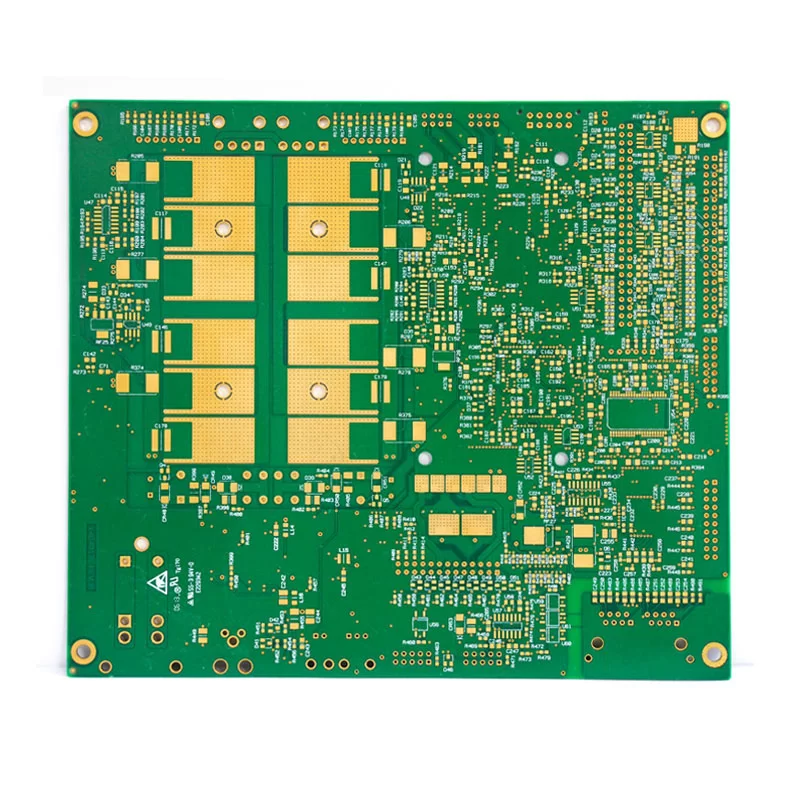
MARK point: This type of point is used to automatically locate the position of the PCB board in SMT production equipment, and must be designed when designing PCB boards. Otherwise, SMT production will be difficult or even impossible.
The MARK point is recommended to be designed as a circular or square shape parallel to the edge of the board, with circular being the best option. The diameter of the circular MARK point is generally 1.0mm, 1.5mm, or 2.0mm. It is recommended to use a diameter of 1.0mm for the MARK point design (if the diameter is too small, the PCB manufacturer's tin spraying on the MARK point will be uneven, making it difficult for the machine to recognize or affecting the accuracy of printing and component installation; if it is too large, it will exceed the window size recognized by the machine, especially the DEK screen printing machine).
The MARK point is generally designed at the diagonal of the PCB board, and the distance between the MARK point and the edge of the board should be at least 5mm to prevent the machine from clamping the MARK point partially and causing the machine camera to fail to capture the MARK point.
The position of the MARK point should not be designed symmetrically to prevent the operator from placing the PCB board in the wrong direction during the production process, causing the machine to mount components incorrectly and causing losses.
There should not be any similar test points or solder pads within 5mm around the MARK point, otherwise the machine may incorrectly recognize the MARK point and cause losses in production.
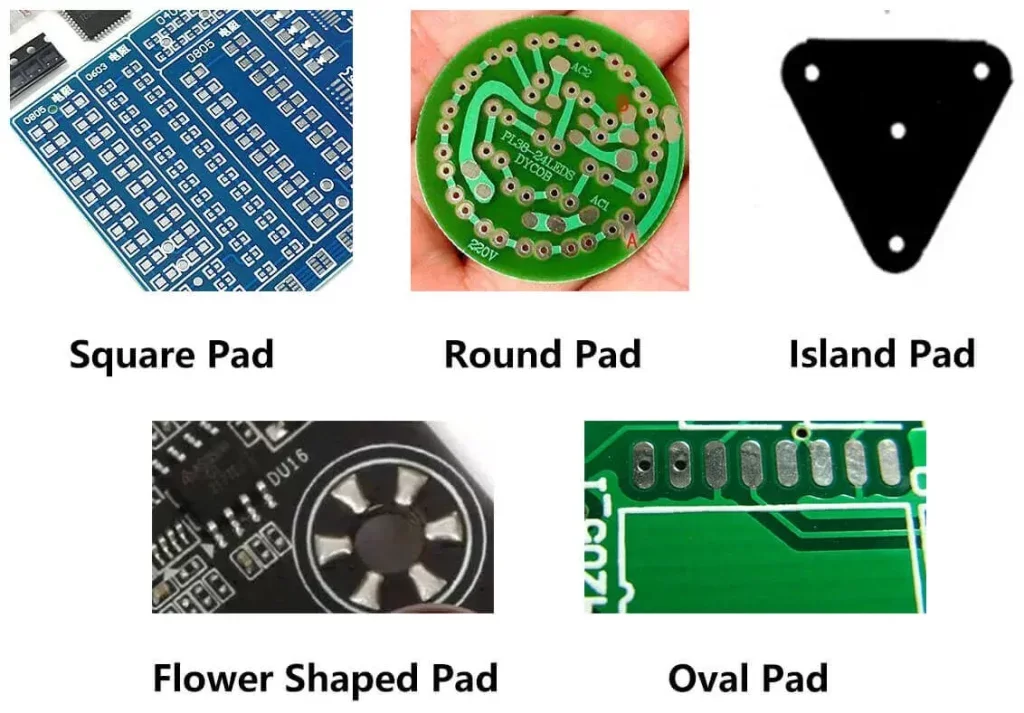
The position of through holes: Improper design of the through hole can lead to insufficient or even no solder during SMT production welding, seriously affecting the reliability of the product. Designers are advised not to design the through hole on top of the solder pad. When designing the through hole around the solder pad of ordinary resistors, capacitors, inductors, and beads, the edge of the through hole and the edge of the solder pad should be kept at least 0.15mm. For other ICs, SOTs, large inductors, electrolytic capacitors, diodes, connectors, etc., the through hole and solder pad should be kept at least 0.5mm away from the edge (because the size of these components will expand when designing the steel mesh) to prevent the solder paste from flowing out of the through hole during the component reflow process;
When designing the circuit, pay attention that the width of the line connecting the solder pad should not exceed the width of the solder pad, otherwise, some components with small spacing are prone to solder bridging or insufficient solder. When adjacent pins of IC components are used as ground, designers are advised not to design them on a large solder pad, which makes it difficult to control SMT welding.
Due to the wide variety of electronic components, the solder pad sizes of most standard components and some non-standard components have been standardized. In future work, we will continue to do this work well to serve design and manufacturing and achieve satisfactory results for everyone.
-20251124061922.webp "New Energy Vehicle Charging Pile PCBA")