PCB manufacturing is the process of building a physical PCB from a PCB design according to a certain set of specifications. Understanding the design specification is very important as it affects the manufacturability, performance and production yield of the PCB.
One of the important design specifications to follow is "Balanced Copper" in PCB manufacturing. Consistent copper coverage must be achieved in each layer of the PCB stackup to avoid electrical and mechanical issues that can hinder circuit performance.
What does PCB balance copper mean?
Balanced copper is a method of symmetrical copper traces in each layer of the PCB stackup, which is necessary to avoid twisting, bending or warping of the board. Some layout engineers and manufacturers insist that the mirrored stack-up of the top half of the layer be completely symmetrical to the bottom half of the PCB.
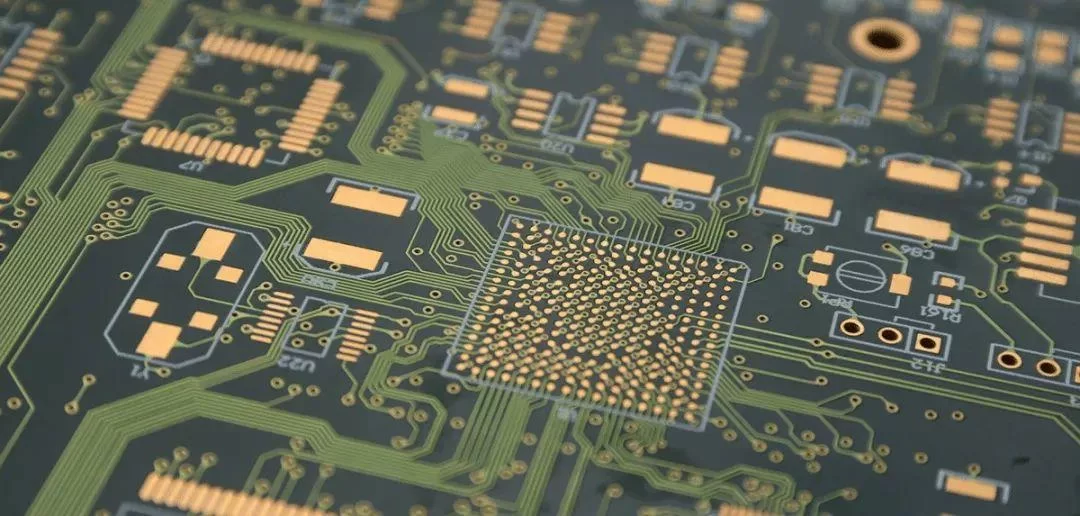
PCB balance copper function
Routing
The copper layer is etched to form the traces, and the copper used as the traces carries the heat along with the signals throughout the board. This reduces damage from irregular heating of the board that could cause internal rails to break.
Radiator
Copper is used as the heat dissipation layer of the power generation circuit, which avoids the use of additional heat dissipation components and greatly reduces the manufacturing cost.
Increase the thickness of conductors and surface pads
Copper used as a plating on a PCB increases the thickness of conductors and surface pads. In addition, robust interlayer copper connections are achieved through plated through-holes.
Reduced ground impedance and voltage drop
PCB balanced copper reduces ground impedance and voltage drop, thereby reducing noise, and at the same time, it can improve the efficiency of the power supply.
PCB balance copper effect
In PCB manufacturing, if the distribution of copper between stacks is not uniform, the following problems may occur:
Improper stack balance
Balancing a stack means having symmetrical layers in your design, and the idea in doing so is to forego areas of risk that could deform during the stack assembly and lamination stages.
The best way to do this is to start the stack house design in the center of the board and place the thick layers there. Often, the PCB designer's strategy is to mirror the top half of the stackup with the bottom half.
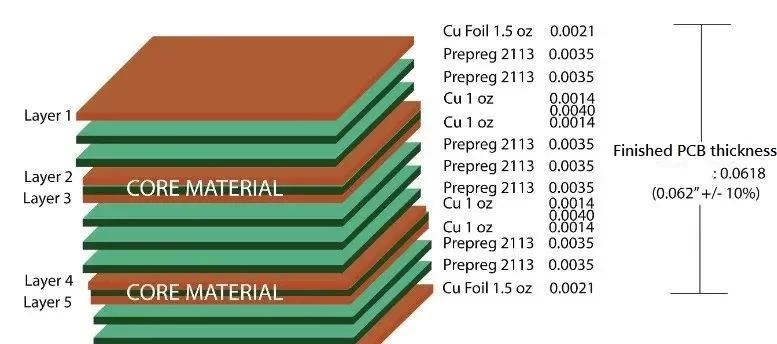
Symmetrical Superposition
PCB layering
The problem mainly comes from using thicker copper (50um or more) on cores where the copper surface is unbalanced, and worse, there is almost no copper fill in the pattern.
In this case, the copper surface needs to be supplemented with "false" areas or planes to prevent spillage of prepreg into the pattern and subsequent delamination or interlayer shorting.
No PCB delamination: 85% of the copper is filled in the inner layer, so filling with prepreg is enough, there is no risk of delamination.
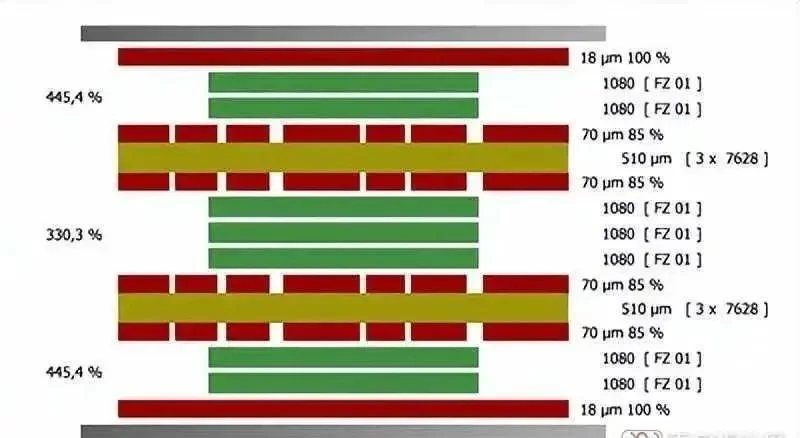
No Risk of PCB Delamination
There is a risk of PCB delamination: copper is only filled by 45%, and the interlayer prepreg is insufficiently filled, and there is a risk of delamination.
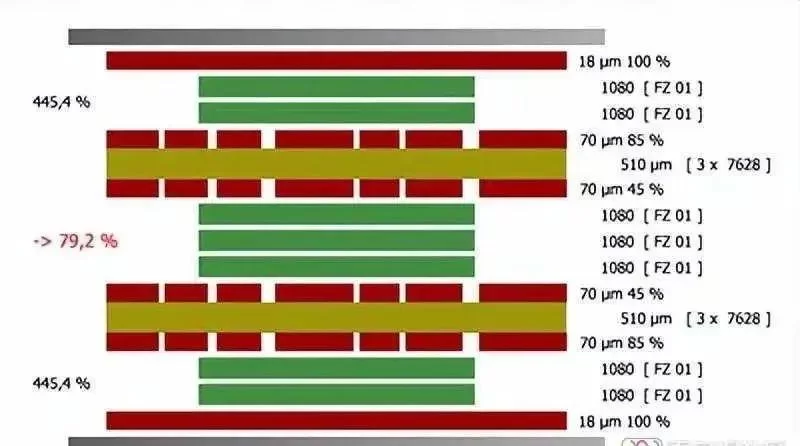
The thickness of the dielectric layer is uneven
Board layer stack management is a key element in designing high-speed boards. In order to maintain the symmetry of the layout, the safest way is to balance the dielectric layer, and the thickness of the dielectric layer should be arranged symmetrically like the roof layers.
But it is sometimes difficult to achieve uniformity in dielectric thickness. This is due to some manufacturing constraints. In this case, the designer will have to relax the tolerance and allow for uneven thickness and some degree of warpage.

The cross section of the circuit board is uneven
One of the common unbalanced design problems is improper board cross-section. Copper deposits are larger in some layers than others. This problem stems from the fact that the consistency of the copper is not maintained across the different layers. As a result, when assembled, some layers get thicker, while other layers with low copper deposition stay thinner. When pressure is applied laterally to the plate, it deforms. To avoid this, the copper coverage must be symmetrical with respect to the center layer.
Hybrid (mixed material) lamination
Sometimes designs use mixed materials in the roof layers. Different materials have different thermal coefficients (CTC). This type of hybrid structure increases the risk of warpage during reflow assembly.
The influence of unbalanced copper distribution
Variations in copper deposition can cause PCB warpage. Some warpages and defects are mentioned below:
Warpage
Warpage is nothing but a deformation of the shape of the board. During the baking and handling of the board, the copper foil and the substrate will undergo different mechanical expansion and compression. This leads to deviations in their coefficient of expansion. Subsequently, internal stresses developed on the board lead to warping.
Depending on the application, the PCB material can be fiberglass or any other composite material. During the manufacturing process, circuit boards undergo multiple heat treatments. If the heat is not evenly distributed and the temperature exceeds the coefficient of thermal expansion (Tg), the board will warp.
Poor electroplating of conductive pattern
To properly set up the plating process, the balance of copper on the conductive layer is very important. If the copper is not balanced on the top and bottom, or even in each individual layer, overplating can occur and lead to trace or underetching of connections. In particular, this concerns differential pairs with measured impedance values. Setting up the correct plating process is complex and sometimes impossible. Therefore, it is important to supplement the copper balance with "fake" patches or full copper.
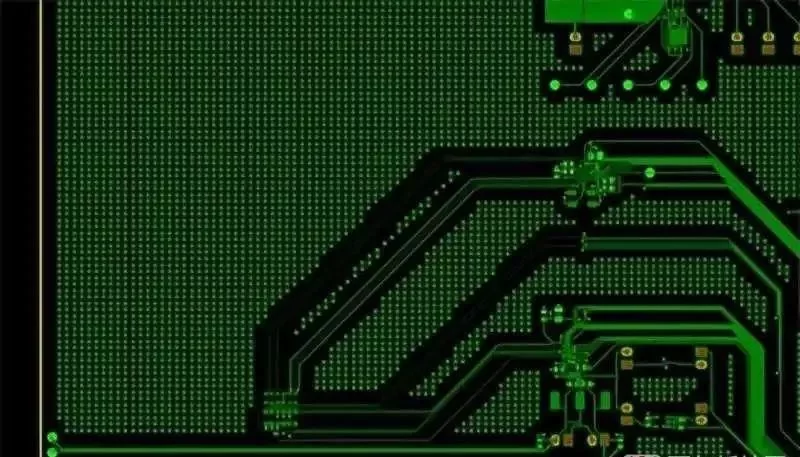
Supplemented with Balanced Copper
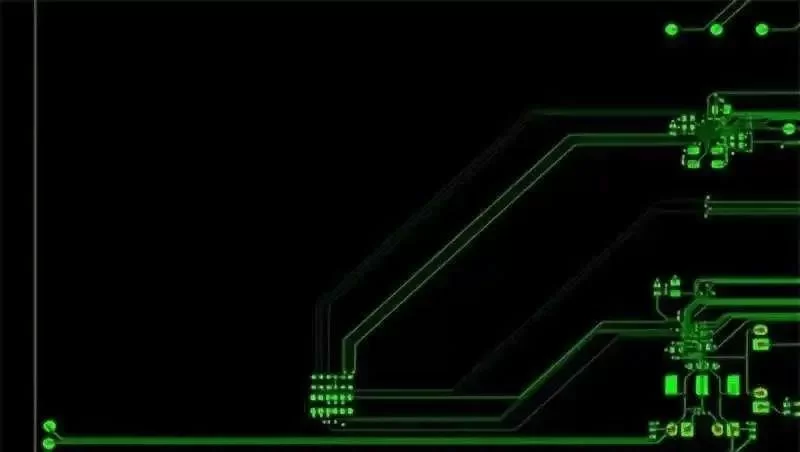
No Supplemental Balance Copper
If the bow is unbalanced, the PCB layer will have cylindrical or spherical curvature
In simple language, you can say that the four corners of a table are fixed and the top of the table rises above it. It was called the bow and was the result of a technical glitch
The bow creates tension on the surface in the same direction as the curve. Also, it causes random currents to flow through the board.
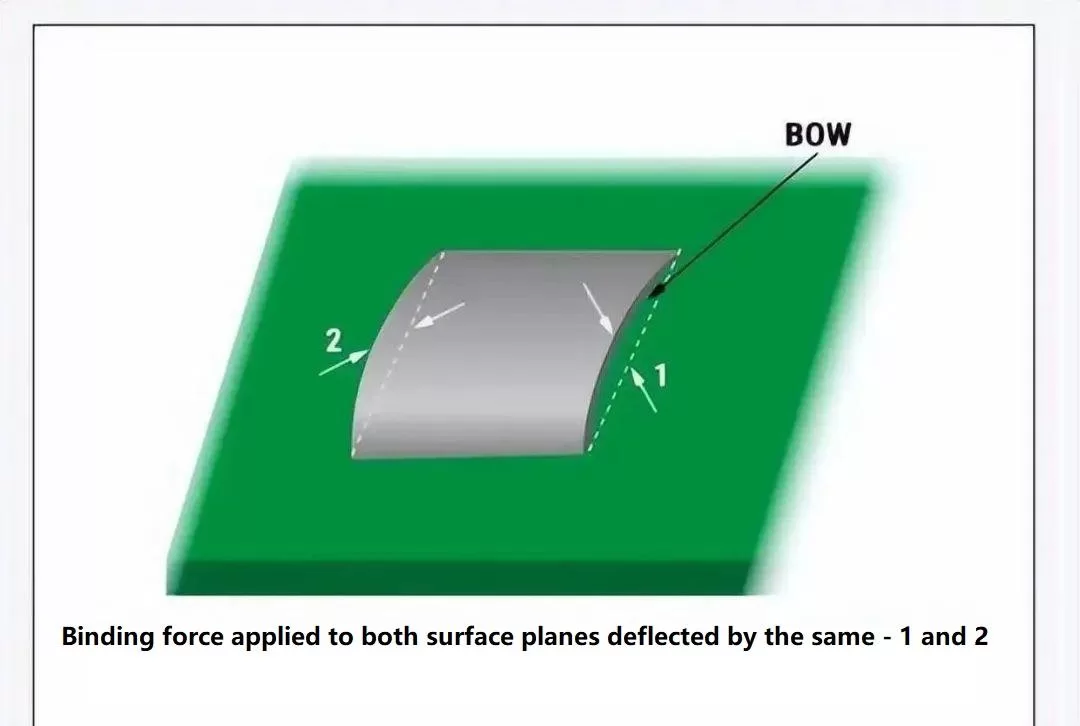
Bow
Bow effect
1. Twisting twist is affected by factors such as circuit board material and thickness. Twist occurs when any one corner of the board is not aligned symmetrically with the other corners. One particular surface goes up diagonally, and then the other corners twist. Very similar to when a cushion is pulled from one corner of a table while the other corner is twisted. Please refer to the figure below.
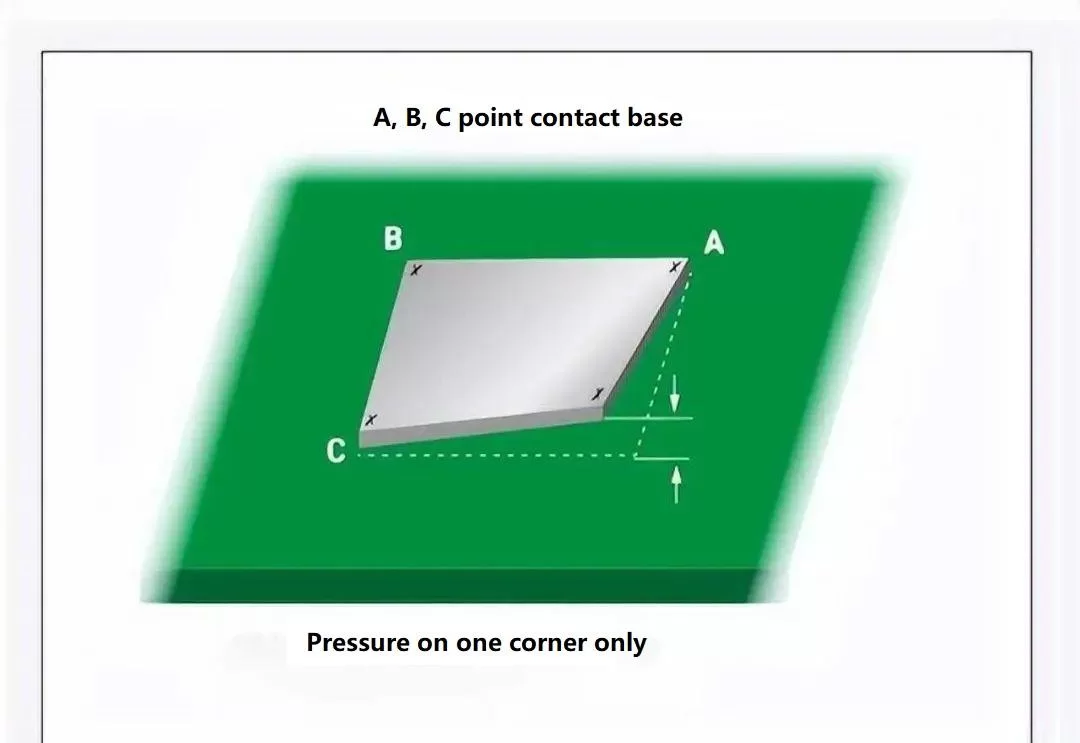
Distortion Effect
1. Resin voids are simply the result of improper copper plating. During assembly stress, stress is applied to the plate in an asymmetric manner. Since pressure is a lateral force, surfaces with thin copper deposits will bleed resin. This creates a void at that location.
2. Measurement of Bow and Twist According to IPC-6012, the maximum allowable value for bow and twist is 0.75% on boards with SMT components, and 1.5% for other boards. Based on this standard, we can also calculate the bend and twist for a specific PCB size.
Bow allowance = plate length or width × percentage of bow allowance / 100
The twist measurement involves the diagonal length of the board. Considering that the plate is constrained by one of the corners and the twist acts in both directions, factor 2 is included.
Maximum permissible twist = 2 x board diagonal length x twist allowance percentage / 100
Here you can see examples of boards that are 4" long and 3" wide, with a 5" diagonal.
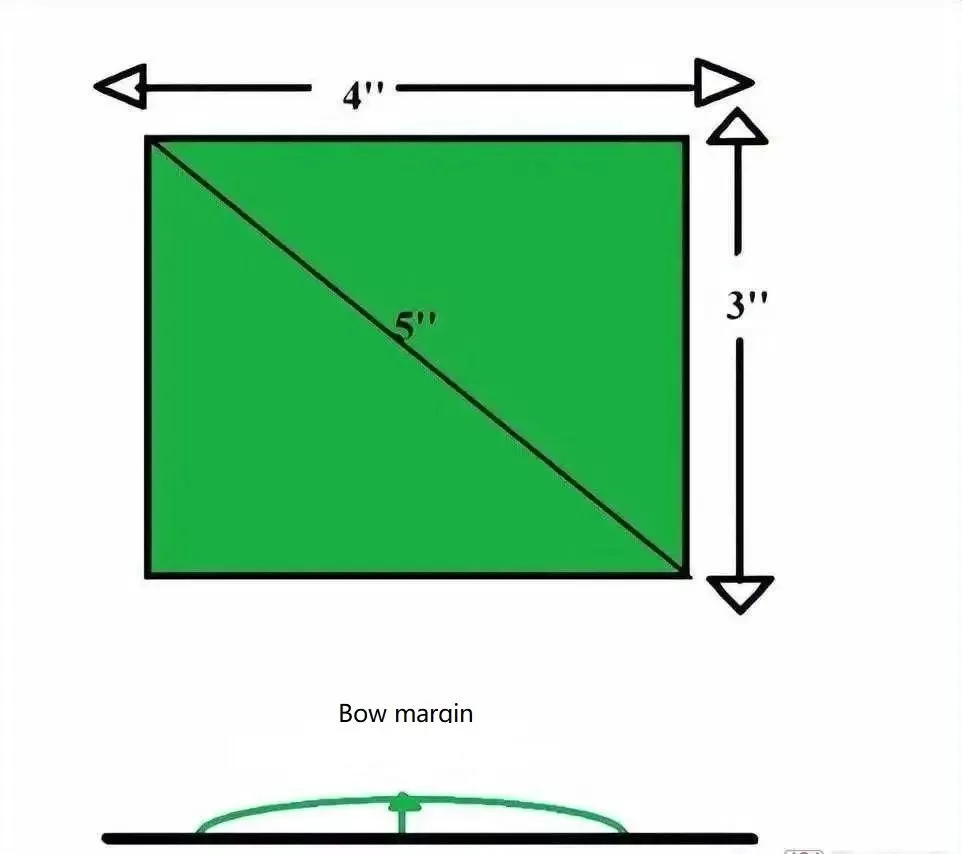
Bending allowance over the entire length = 4 x 0.75/100 = 0.03 inches
Bending allowance in width = 3 x 0.75/100 = 0.0225 inches
Maximum permissible distortion = 2 x 5 x 0.75/100 = 0.075 inches
-20251124061922.webp "New Energy Vehicle Charging Pile PCBA")