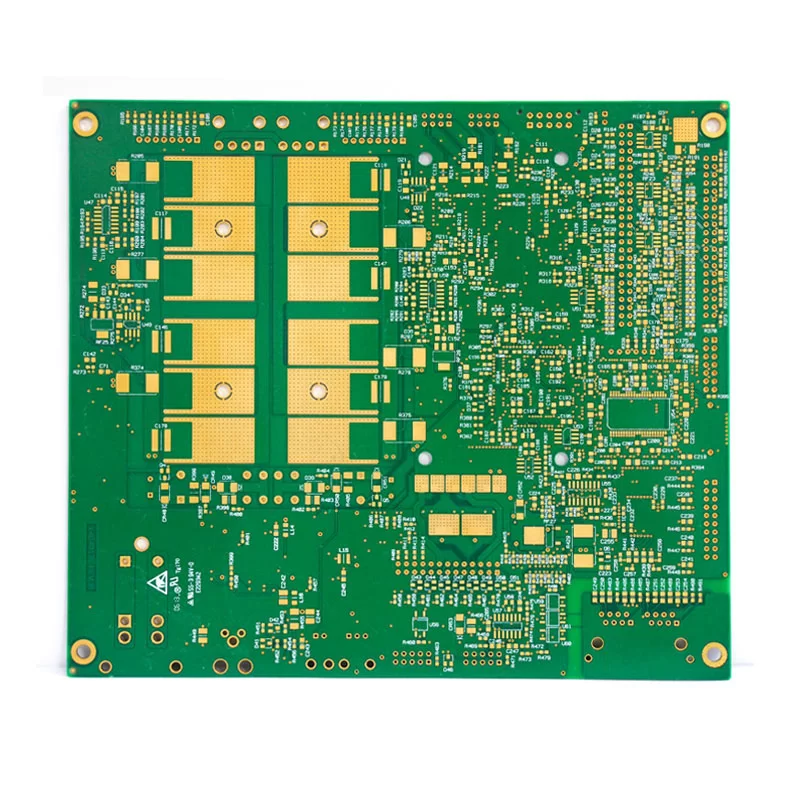
Solving Critical Overheating with Thermal Relief & Heat Dissipation Techniques for Aluminum PCBs
In modern power electronics and LED applications, the primary obstacle to component longevity is inefficient heat management. Engineers often struggle with localized hotspots that compromise signal integrity and lead to premature hardware failure. Addressing these challenges requires more than just standard manufacturing; it demands specialized Thermal Relief & Heat Dissipation Techniques for Aluminum PCBs designed to bridge the gap between high-power density and thermal stability.
HUB Circuits addresses these pain points by leveraging a robust manufacturing infrastructure. As an ISO 9001 certified and UL recognized facility, we specialize in high-mix, low-to-medium volume production that prioritizes rapid prototyping. Our expertise in fabricating aluminum base boards ensures that heat is drawn away from sensitive components efficiently, utilizing advanced dielectric layers and precision-engineered metal cores to maintain peak performance in demanding environments like automotive electronics and industrial controls.
Engineering Standards for Thermal Relief & Heat Dissipation Techniques for Aluminum PCBs
Technical precision in metal-clad PCBs is dictated by the synergy between the dielectric breakdown voltage and the thermal conductivity of the substrate. To ensure reliability, our engineering process adheres to rigorous benchmarking standards that optimize the thermal path.
| Performance Metric | Industry Significance | Our Engineering Standard | Advantage |
|---|---|---|---|
| Thermal Conductivity | Determines the speed of heat transfer across the dielectric. | 1.0 W/m-K to 3.0 W/m-K (Customizable) | Drastically reduces junction temperature of power components. |
| Dielectric Strength | Prevents electrical breakdown in high-voltage environments. | >500V/mil with UL Recognition | Ensures safety and durability in medical and telecommunications gear. |
| Layer Registration | Critical for alignment in 1-32 layer complex builds. | Advanced HDI High-Density Interconnection | Allows for compact designs without sacrificing thermal relief zones. |
| Surface Finish Consistency | Affects solderability and thermal contact resistance. | Advanced Surface Finishes (ENIG/HASL/OSP) | Optimizes the interface between components and the heat-dissipating core. |
Maximizing ROI with Thermal Relief & Heat Dissipation Techniques for Aluminum PCBs
Investing in high-tier thermal management is a strategic financial decision. By implementing advanced Thermal Relief & Heat Dissipation Techniques for Aluminum PCBs, organizations can significantly reduce the Total Cost of Ownership (TCO). High-efficiency heat dissipation minimizes the need for bulky active cooling systems (like fans or heavy heat sinks), allowing for smaller, lighter, and more cost-effective end products.
Furthermore, our focus on short lead times and high-quality fabrication means your path from prototype to market is streamlined. With HUB Circuits’ capability to handle 1-32 layers and complex HDI designs, you gain a partner capable of scaling with your technological evolution. The result is a more resilient product that avoids the costly recalls and maintenance cycles associated with thermal fatigue.
Related products
Top Selling Products
Choosing a Reliable PCB Manufacturer for High Performance Electronics
Comprehensive Guide to Printed Circuit Board Design and Fabrication
123456Modern Printed Circuit Board Design and Global Manufacturing Trends123123123