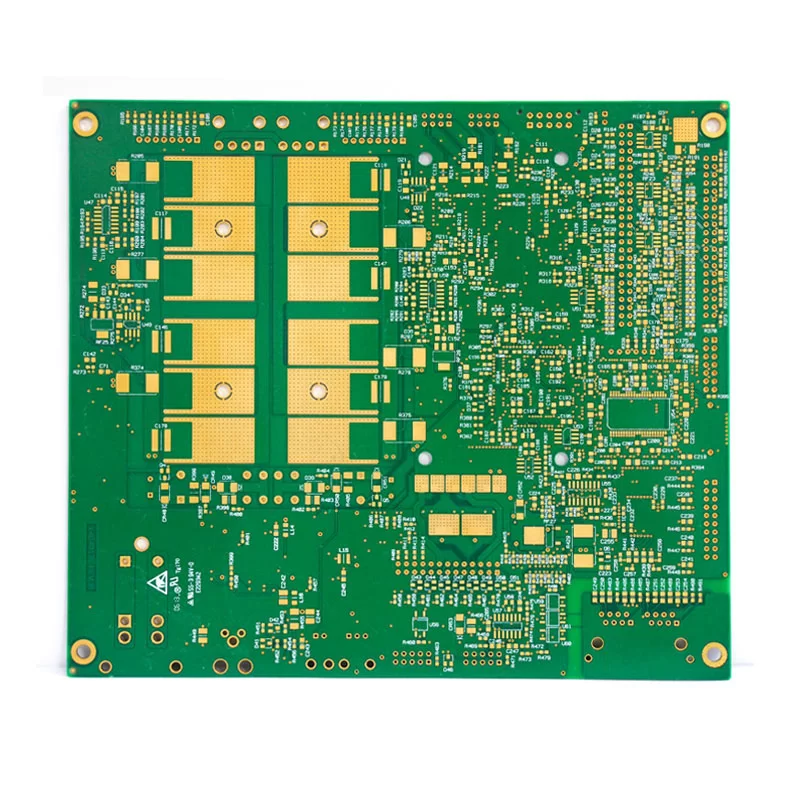
Navigating Miniaturization: The Guide to High-Density HDI, Micro & Precision PCB Fabrication
As hardware boundaries are continuously pushed across the telecommunications, automotive, and medical device sectors, engineers face a critical bottleneck: routing massive data arrays through increasingly microscopic footprints. Conventional circuit boards struggle to maintain signal integrity while accommodating the dense pin-counts required by modern processors. Consequently, complex design layouts frequently lead to protracted prototyping phases, directly jeopardizing vital product launch windows and increasing overall development friction.
Overcoming these spatial and functional constraints requires a manufacturing partner specifically calibrated for rapid agility and exacting quality. Operating out of Shenzhen, HUB Circuits has engineered an infrastructure tailored for high-mix, low-to-medium volume production. By delivering scalable solutions spanning 1 to 32 layers—including specialized rigid-flex and aluminum base boards—hardware innovators can confidently transition from concept to functional prototype with unprecedented speed. Every unit is strictly governed by ISO 9001 and UL safety recognitions, ensuring your most intricate interconnection designs perform flawlessly in demanding field environments.
Engineering Standards for High-Density HDI, Micro & Precision PCB Fabrication
Achieving defect-free dense routing relies on uncompromising technical baselines rather than just advanced machinery. Establishing rigorous process controls is the foundation of high-frequency and high-speed electrical performance. Below is a detailed overview of the core engineering benchmarks that dictate our facility’s output and reliability.
| Performance Metric | Industry Significance | Our Engineering Standard | Advantage |
|---|---|---|---|
| Layer Count Scalability | Determines the routing density, power distribution, and functional complexity of the device. | 1 to 32 Layers Configuration | Provides true end-to-end design flexibility, scaling seamlessly from simple peripherals to complex telecom infrastructure. |
| Trace & Space Precision | Directly impacts the ability to utilize micro-pitch BGA components without crosstalk. | Ultra-Fine Line Width / Spacing | Maximizes real estate on miniaturized medical and industrial control electronics while preserving signal integrity. |
| Surface Finish Technology | Critical for long-term solder joint reliability and oxidation prevention. | Advanced Surface Finishes | Ensures robust assembly yields and optimal conductivity for high-speed transmission applications. |
| Quality Assurance & Safety | Validates consistency, safety, and operational longevity across manufacturing batches. | ISO 9001 Certified & UL Recognized | Mitigates compliance risks and guarantees adherence to strict global electrical and safety standards. |
Maximizing ROI with High-Density HDI, Micro & Precision PCB Fabrication
Investing strategically in advanced interconnection capabilities translates directly into measurable financial gains. Lengthy prototyping delays or field failures caused by substandard manufacturing severely erode profit margins and damage brand reputation. By leveraging a one-stop service model—encompassing both fabrication and assembly—companies effectively consolidate their supply chains. This streamlined approach drastically reduces time-to-market, allowing organizations to outpace competitors while minimizing the hidden costs associated with multi-vendor logistics and extensive design revisions.
The visualization below highlights the operational efficiency and lead-time reductions hardware teams typically experience when transitioning from conventional rigid-volume fabricators to our agile, rapid-turnaround methodology tailored for specialized circuit boards.
Related products

Top Selling Products
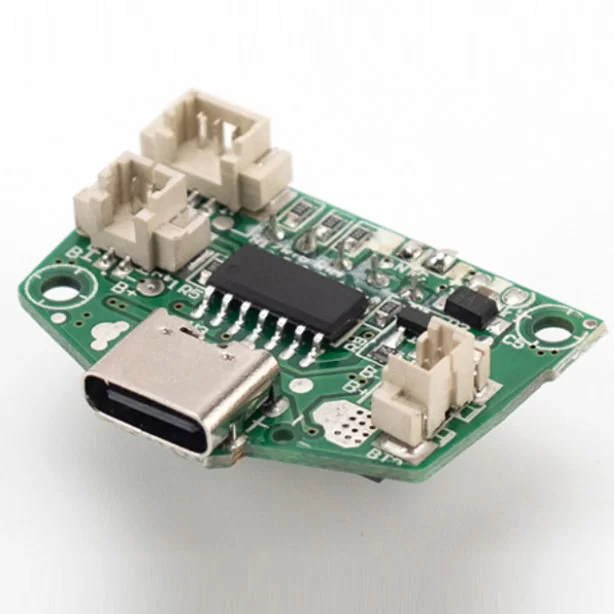
Choosing a Reliable PCB Manufacturer for High Performance Electronics
Comprehensive Guide to Printed Circuit Board Design and Fabrication

123456Modern Printed Circuit Board Design and Global Manufacturing Trends123123123