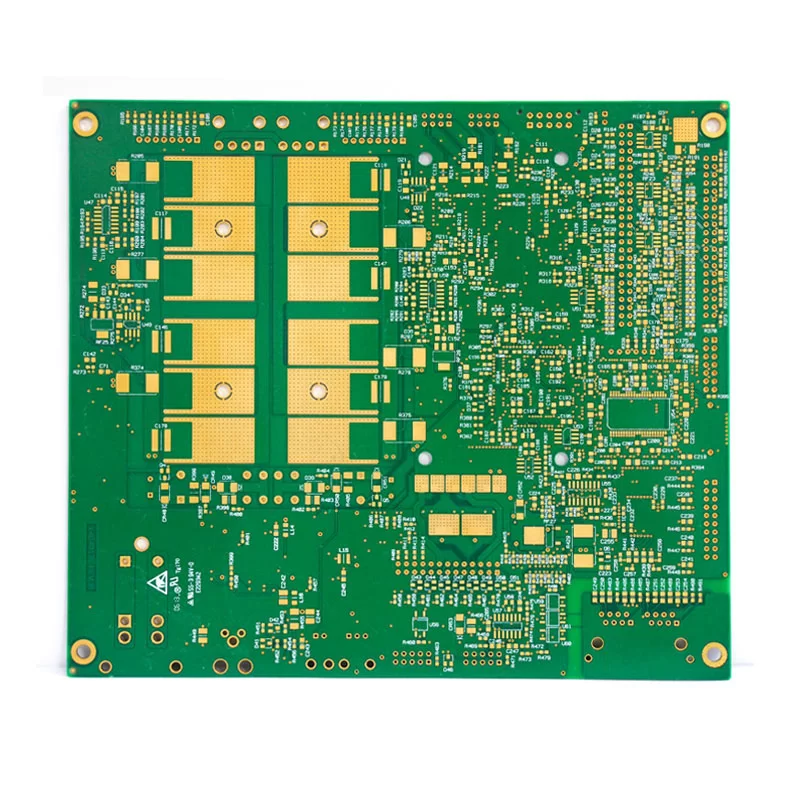
Optimizing Manufacturing Efficiency through Standard PCB Panel Sizes & Automated Depaneling Services
Navigating the transition from prototype to production often involves significant hurdles in material utilization and mechanical stress during board separation. Many engineering teams struggle with unconventional board geometries that lead to excessive waste or damage during manual separation. HUB Circuits addresses these challenges by integrating Standard PCB Panel Sizes & Automated Depaneling Services into a seamless workflow. By leveraging our specialized focus on high-mix, low-to-medium volume fabrication, we ensure that your designs are nested into industry-optimized panels that reduce per-unit costs while maintaining the structural integrity of complex 1-32 layer boards.
As an ISO 9001 certified and UL recognized manufacturer, our approach focuses on eliminating the human error associated with traditional "break-away" methods. Whether you are developing high-frequency telecommunications hardware or high-density medical electronics, our technical team aligns your design with optimized panel formats to facilitate high-speed automated processing, ensuring your time-to-market is significantly compressed without compromising on IPC Class quality standards.
Technical Specifications for Standard PCB Panel Sizes & Automated Depaneling Services
Achieving precision in high-density interconnection (HDI) and rigid-flex designs requires strict adherence to dimensional tolerances. Our engineering standards for Standard PCB Panel Sizes & Automated Depaneling Services are designed to maximize the working area of the production sheet while providing the necessary clearance for automated routing and laser cutting equipment.
| Performance Metric | Industry Significance | Our Engineering Standard | Advantage |
|---|---|---|---|
| Panel Dimensions | Determines material yield and equipment compatibility. | 18" x 24" (457mm x 610mm) & 12" x 18" | Maximizes 1-32 layer substrate utilization for lower costs. |
| Depaneling Precision | Prevents stress-induced micro-cracking in SMT components. | Automated CNC Routing / Laser Cut (±0.05mm) | Ensures safety for sensitive medical and automotive electronics. |
| Edge Clearance | Essential for high-speed pick-and-place stability. | Standard 5mm – 10mm handling rails | Optimizes automated assembly throughput. |
| Fiducial Placement | Allows optical alignment for automated systems. | Global and Local Laser-marked fiducials | High-density (HDI) alignment accuracy during separation. |
By utilizing advanced manufacturing and testing equipment at our Shenzhen facility, HUB Circuits ensures that every panel is optimized for Standard PCB Panel Sizes & Automated Depaneling Services, particularly for Aluminum base and high-speed digital boards where thermal and mechanical stability are paramount.
Maximizing ROI with Standard PCB Panel Sizes & Automated Depaneling Services
The strategic implementation of Standard PCB Panel Sizes & Automated Depaneling Services is a critical lever for long-term financial gain. By shifting from manual labor to automated precision, companies can realize a drastic reduction in "scrap rate" caused by board fractures or copper pull-back during separation. HUB Circuits provides a one-stop solution that bridges the gap between PCB fabrication and final assembly, ensuring that the economies of scale are captured even in low-to-medium volume runs.
Investing in professional Standard PCB Panel Sizes & Automated Depaneling Services translates to higher yield rates and lower assembly labor costs. Our expertise in high-mix environments allows us to provide rapid prototyping that scales efficiently into production, backed by the reliability of a global supplier serving the industrial control and telecommunications sectors.
Related products


Top Selling Products
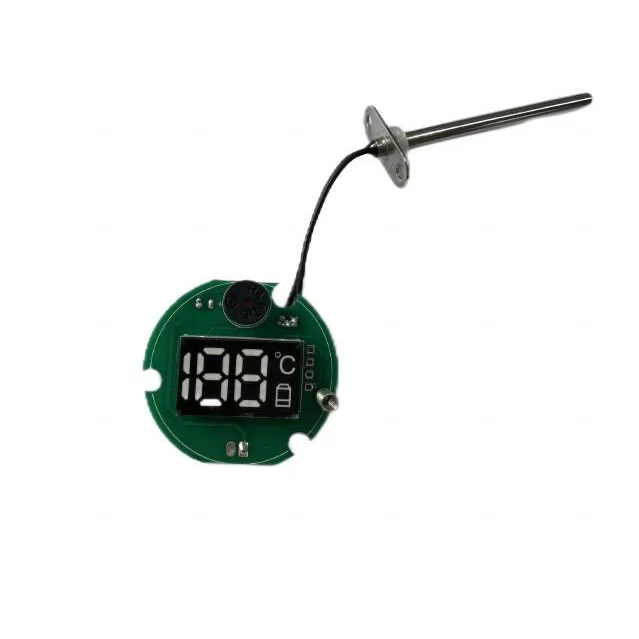
-20251121093312.webp "Wired Automotive Combination Switch PCBA")
Choosing a Reliable PCB Manufacturer for High Performance Electronics
Comprehensive Guide to Printed Circuit Board Design and Fabrication

123456Modern Printed Circuit Board Design and Global Manufacturing Trends123123123