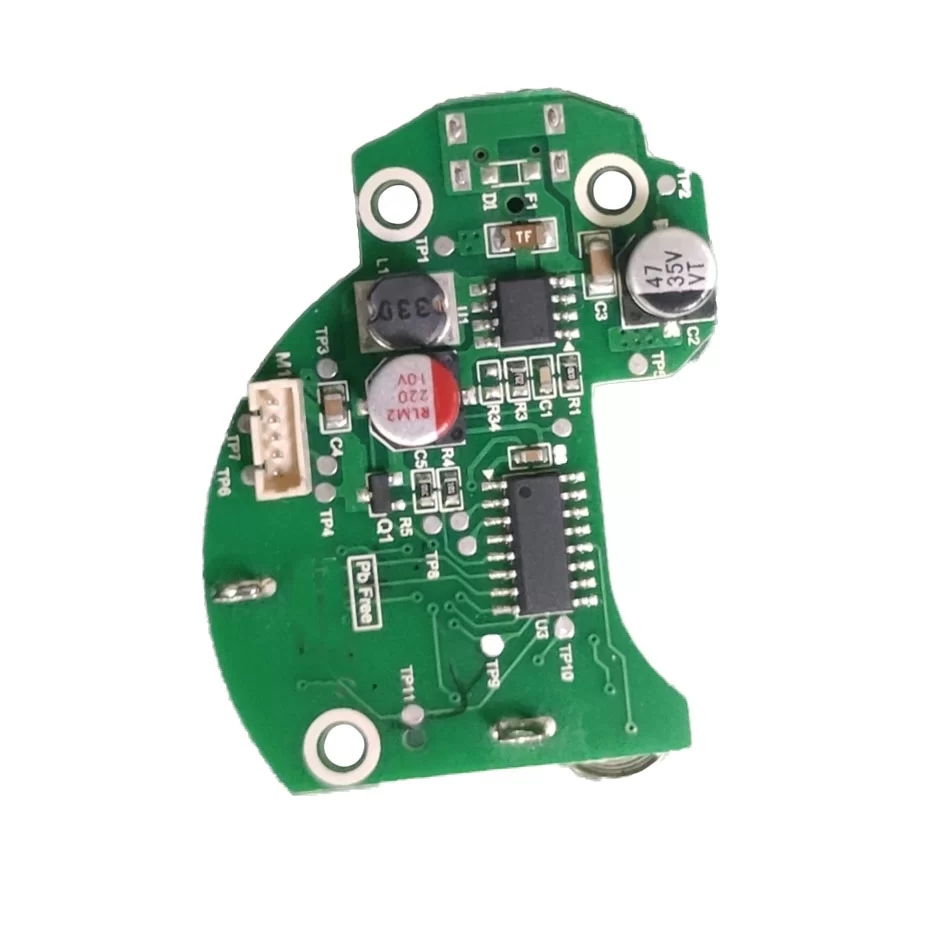
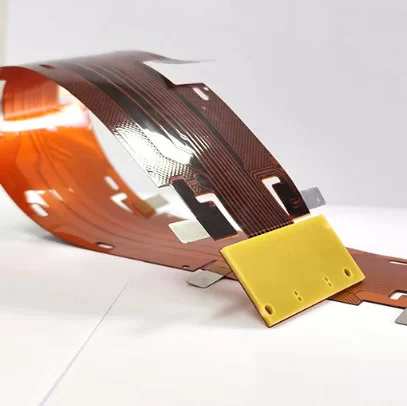
Navigating the Complexity of IoT & Automotive Printed Circuit Board Design
In the rapidly evolving landscape of smart mobility and connected devices, engineering teams often face the dual pressure of shrinking form factors and extreme environmental demands. Achieving signal integrity while ensuring thermal stability requires more than just standard manufacturing; it demands a partner capable of translating sophisticated IoT & Automotive Printed Circuit Board Design concepts into rugged, reliable hardware.
HUB Circuits addresses these critical challenges by specializing in high-mix, low-to-medium volume fabrication with a focus on rapid prototyping. Since our inception, we have integrated advanced UL-recognized materials and ISO 9001 quality management systems to bridge the gap between complex architectural design and flawless physical execution. By leveraging our specialized expertise in high-density interconnection (HDI), we ensure your automotive sensors and IoT gateways maintain peak performance in the most rigorous field conditions.
Technical Engineering Standards for IoT & Automotive Printed Circuit Board Design
Precision is the baseline for modern electronic ecosystems. For IoT & Automotive Printed Circuit Board Design, we implement rigorous manufacturing benchmarks that exceed standard commercial specifications, focusing on fine line width/spacing and multi-layer structural integrity.
| Performance Metric |
Industry Significance |
Our Engineering Standard |
Advantage |
| Layer Count Complexity |
Supports complex IoT routing |
1-32 Layers Capability |
Maximum design flexibility for compact devices. |
| Interconnect Density |
Critical for high-speed signal pathing |
Advanced HDI & Fine Line/Spacing |
Reduced signal loss and minimized PCB footprint. |
| Material Versatility |
Essential for automotive thermal loads |
Aluminum base & Rigid-Flex options |
Superior heat dissipation and vibration resistance. |
| Quality Assurance |
Ensures long-term vehicle safety |
UL Recognized & ISO 9001 Certified |
Guaranteed reliability in mission-critical applications. |
Maximizing ROI through Strategic IoT & Automotive Printed Circuit Board Design
The financial viability of a product line often hinges on the transition from prototype to mass market. Our approach to IoT & Automotive Printed Circuit Board Design prioritizes "One-Stop Service"—integrating fabrication and assembly to eliminate supply chain fragmentation. This vertical integration significantly reduces "time-to-market" for telecommunications and industrial control projects, providing a measurable competitive edge.
By utilizing our short lead time rapid prototyping model, firms can iterate faster and reduce the high costs associated with design-rule-check (DRC) failures. Investing in high-frequency and high-speed PCB specialization today ensures that your hardware remains compatible with future 5G and autonomous driving standards, securing long-term ROI.
Related products
Choosing a Reliable PCB Manufacturer for High Performance Electronics
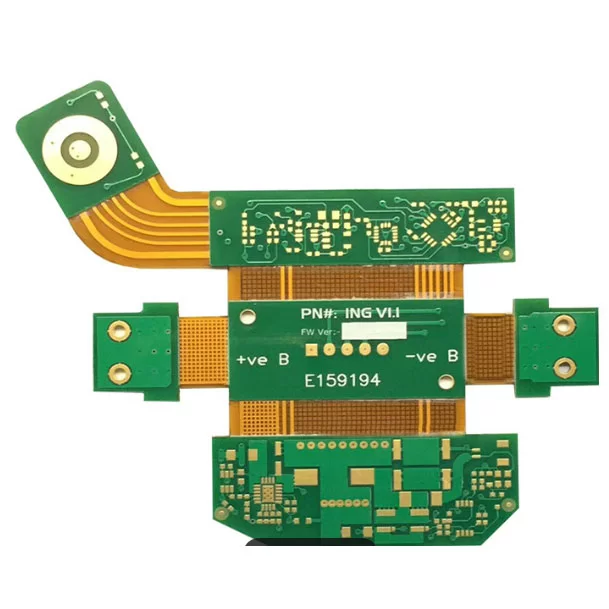
Selecting a reliable PCB Manufacturer is a critical decision that determines the ultimate reliability and performance of any electronic device. From the intricate circuits in medical implants to the robust controllers in automotive systems, the quality of the printed circuit board serves as the foundation for all hardware innovation. Understanding the nuances of fabrication ensures that designers can translate their theoretical schematics into functional, market-ready products. In today's hyper-connected era, the demand for miniaturization and high-speed data transmission has pushed a professional PCB Manufacturer to adopt advanced technologies like HDI and Rigid-Flex designs.
Comprehensive Guide to Printed Circuit Board Design and Fabrication
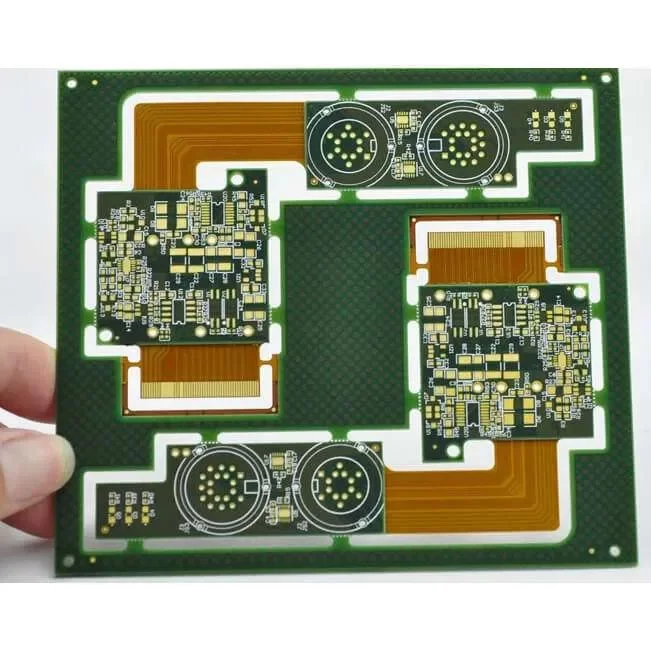
The modern digital era is built upon a foundation of intricate circuitry, where the Printed Circuit Board serves as the central nervous system for almost every electronic device we touch. From the smartphone in your pocket to the complex control systems of an autonomous vehicle, these boards enable the precise routing of electrical signals, ensuring that components communicate seamlessly to perform complex tasks. Understanding the nuances of PCB design and fabrication is no longer just for electrical engineers; it is critical for product designers and procurement specialists who aim to optimize for reliability and cost.

123456Modern Printed Circuit Board Design and Global Manufacturing Trends123123123
12321321312321The modern technological landscape is built upon the invisible yet intricate architecture of the Printed Circuit Board. From the smartphone in your pocket to the complex control systems of autonomous vehicles, these boards serve as the nervous system of electronic devices, enabling the precise routing of electrical signals and the secure mounting of components. Understanding the nuances of PCB design and manufacturing is no longer just for engineers; it is essential for any business aiming to innovate in the hardware space.
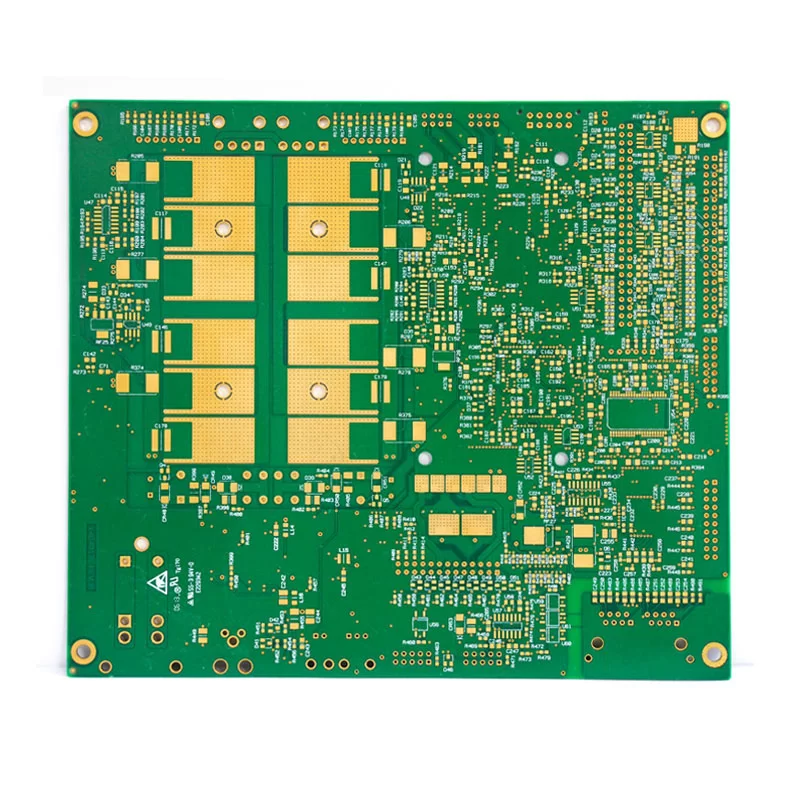
Comprehensive Guide to Understanding and Utilizing Rigid PCB Technology
In the world of electronics, the Printed Circuit Board (PCB) is a fundamental component. Among the various types, Rigid PCBs stand out for their stability, cost-effectiveness, and widespread applications. This article will delve into the intricacies of Rigid PCBs, covering their characteristics, manufacturing processes, applications, advantages, and considerations for choosing the right one for your project. Whether you're a seasoned engineer or new to electronics manufacturing, this guide will provide valuable insights.
HUB Circuits delivered an exceptional HDI board for our new automotive sensor project. Their rapid prototyping and short lead times helped us hit our tight testing deadlines without sacrificing quality. Highly recommended for complex automotive PCB designs.
10 April 2026
Managing an IoT hardware startup is tough, but their one-stop fabrication and assembly service made our latest gateway launch seamless. The 12-layer rigid-flex boards were flawless and perfectly handled our compact form factor requirements.
10 April 2026
As a manufacturer of mission-critical systems, we need absolute reliability. The ISO 9001 certification and UL-recognized materials used in their high-frequency boards gave us the confidence we needed. Fantastic engineering support throughout the entire process.
10 April 2026
It is hard to find a manufacturing partner willing to do high-mix, low-volume runs with such precision. Their aluminum base boards completely solved the thermal management issues we were facing in our new smart mobility prototype.
10 April 2026