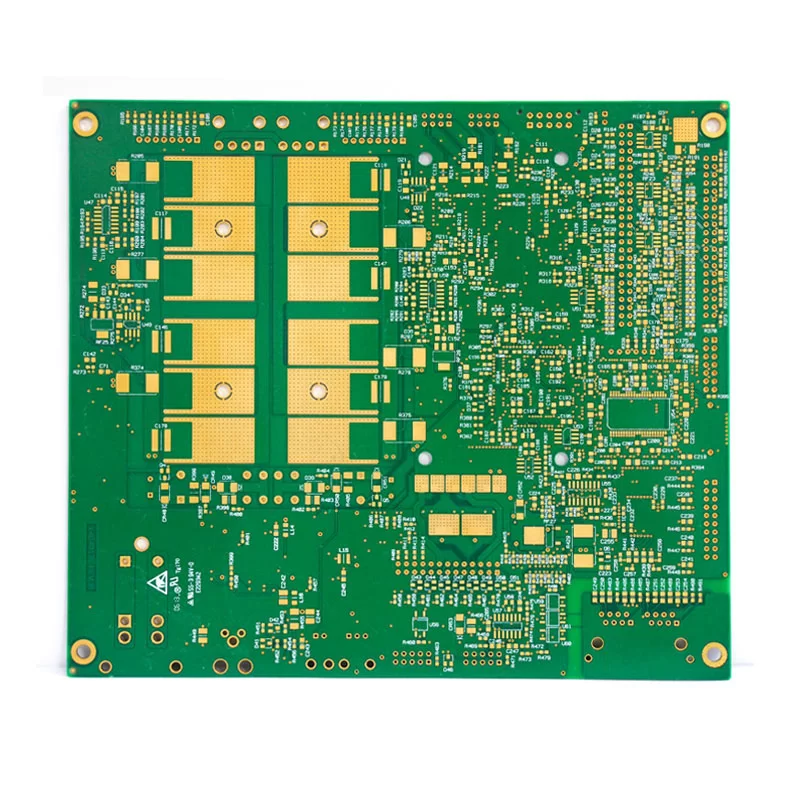
Choosing the Right Halogen-Free & Environmentally Friendly PCB Manufacturing Partner
Navigating the modern electronics landscape presents a critical challenge: achieving peak high-frequency and high-speed performance while strictly adhering to global environmental mandates. For engineers and product managers in the telecommunications, medical, and automotive sectors, the pressure to eliminate toxic substances without compromising signal integrity or board durability is immense. Toxic emissions during disposal and the risk of regulatory non-compliance can derail entire product launches.
This is where precision engineering meets ecological responsibility. By integrating advanced surface finishes and specialized substrate materials, HUB Circuits delivers one-stop Halogen-Free & Environmentally Friendly PCB Manufacturing. Operating from our state-of-the-art facility in the Xing Nan Industrial Park, Shenzhen, we specialize in high-mix, low-to-medium volume fabrication. Our rapid prototyping capabilities ensure that your transition to green electronics is seamless, swift, and fully compliant with international safety standards, removing the guesswork from eco-conscious product development.
Engineering Standards for Halogen-Free & Environmentally Friendly PCB Manufacturing
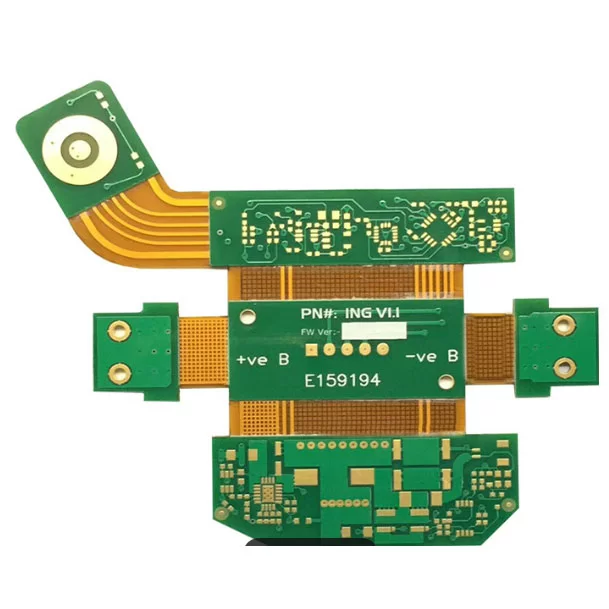
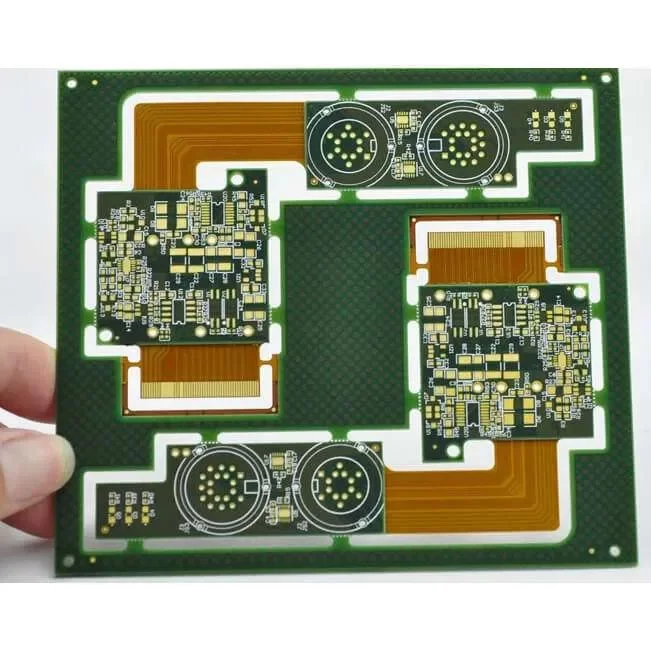
Transitioning to eco-friendly materials requires rigorous technical adaptation, particularly when dealing with complex High-Density Interconnect (HDI) and multi-layer boards. We have optimized our entire fabrication line to support up to 32 layers, ensuring that every flexible, rigid-flex, and aluminum base board meets uncompromising safety and performance benchmarks.
Backed by ISO 9001 certification and UL recognition, our production methodologies bridge the gap between sustainability and high-reliability industrial control and telecommunication applications.
| Performance Metric | Industry Significance | Our Engineering Standard | Advantage |
|---|---|---|---|
| Material Composition | Compliance with RoHS/REACH and elimination of toxic halogens. | UL-recognized halogen-free substrates with advanced surface finishes. | Guarantees product safety and global market entry without regulatory friction. |
| Layer Scalability | Complex electronics require high layer counts in compact spaces. | 1-32 layers including precision HDI boards. | Supports high-density, eco-friendly designs for medical and automotive electronics. |
| Production Flexibility | Agility in testing green designs before mass production. | High-mix, low-to-medium volume rapid prototyping. | Accelerates R&D cycles and reduces time-to-market for sustainable innovations. |
| Quality Assurance | Ensuring lead-free and halogen-free boards do not suffer from thermal stress. | ISO 9001 certified quality management and rigorous automated testing. | Minimizes field failures and ensures long-term reliability under thermal loads. |
Maximizing ROI with Halogen-Free & Environmentally Friendly PCB Manufacturing
Investing in green electronics is no longer just a regulatory checkbox; it is a strategic driver for long-term profitability. By adopting reliable Halogen-Free & Environmentally Friendly PCB Manufacturing, forward-thinking brands significantly lower lifecycle costs. The reduction in hazardous waste disposal fees, coupled with the elimination of regulatory fines, creates an immediate financial advantage. Furthermore, eco-certified products command a premium in the modern consumer and industrial markets.
Our commitment to short lead times and one-stop assembly minimizes overhead and supply chain bottlenecks. By partnering with a globally recognized fabricator equipped with advanced manufacturing infrastructure, you secure not just a compliant printed circuit board, but a sustainable competitive edge. The data below illustrates the projected cost-efficiency over time when transitioning from traditional fabrication to our optimized, eco-friendly prototyping and production model.
Related products
Top Selling Products
Choosing a Reliable PCB Manufacturer for High Performance Electronics
Comprehensive Guide to Printed Circuit Board Design and Fabrication

123456Modern Printed Circuit Board Design and Global Manufacturing Trends123123123