Choosing the Right Partner for Flexible & Rigid Flex PCB Assembly
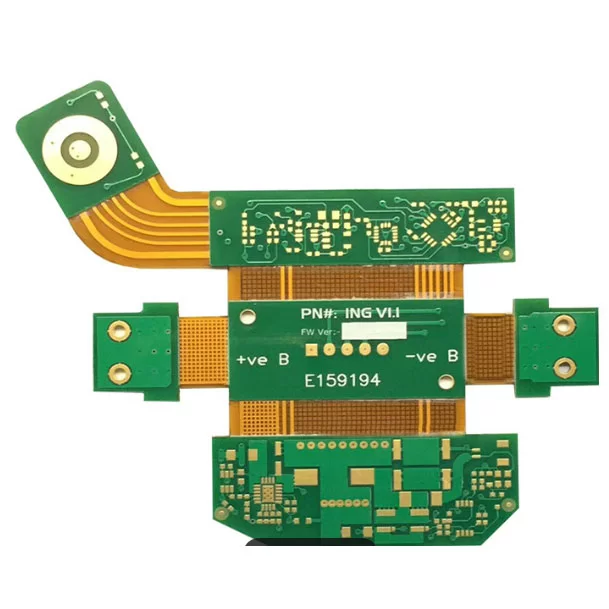
Modern electronics demand more than just connectivity; they require spatial efficiency and structural integrity in environments where traditional rigid boards fail. Navigating the complexities of Flexible & Rigid Flex PCB Assembly involves balancing bend radius requirements with signal integrity and thermal management. For engineers and procurement specialists, the challenge lies in finding a manufacturer capable of handling high-mix, low-to-medium volume projects without compromising on precision.
HUB Circuits addresses these critical pain points through a streamlined "one-stop" service model. By integrating advanced fabrication with specialized assembly processes, we reduce lead times and eliminate the logistical friction typically associated with multi-vendor sourcing. Operating from our Shenzhen-based high-tech facility, we leverage ISO 9001 certified workflows to ensure that every Flexible & Rigid Flex PCB Assembly meets the rigorous safety and quality standards required for global industrial and medical applications.
Engineering Standards for Flexible & Rigid Flex PCB Assembly
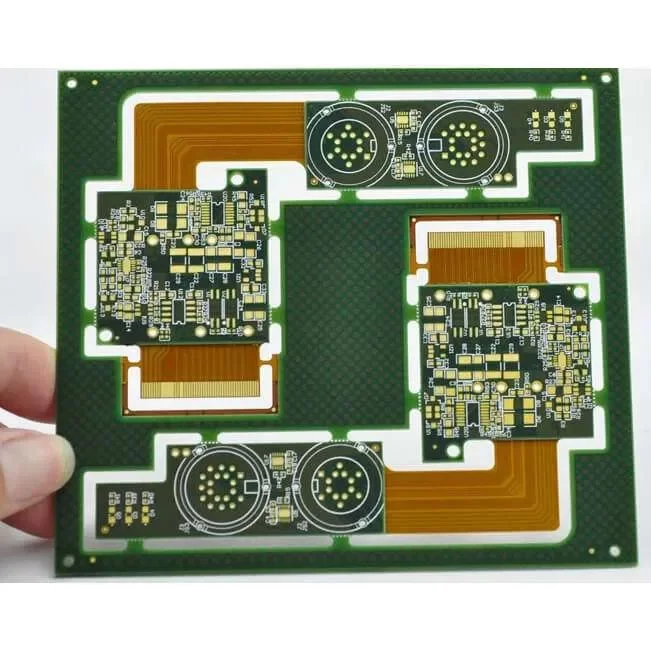
The transition from 2D designs to 3D dynamic applications necessitates a sophisticated understanding of material science and interconnection technology. Our engineering approach to Flexible & Rigid Flex PCB Assembly focuses on optimizing the transition zone between rigid and flex layers to prevent mechanical stress failures.
| Performance Metric |
Industry Significance |
Our Engineering Standard |
Advantage |
| Layer Count Capability |
Determines circuit density and complexity. |
Up to 32 Layers |
Supports high-density HDI integrations in compact enclosures. |
| Surface Finish Variety |
Affects solderability and shelf life. |
Advanced Finishes (ENIG, OSP, HASL) |
Optimized bonding for fine-pitch components on flexible substrates. |
| Substrate Versatility |
Impacts thermal and mechanical durability. |
Aluminum, Polyimide, FR4 Hybrids |
Superior thermal dissipation and structural flexibility. |
| Manufacturing Precision |
Crucial for miniaturization and signal speed. |
Fine Line Width/Spacing |
High-speed signal integrity for telecommunications and medical devices. |
Maximizing ROI with Flexible & Rigid Flex PCB Assembly
Strategic investment in Flexible & Rigid Flex PCB Assembly translates directly to reduced assembly labor, lower weight, and decreased failure points in the field. By utilizing our rapid prototyping capabilities, clients can validate complex designs faster, significantly shortening the time-to-market. HUB Circuits empowers global partners in the automotive and industrial sectors to achieve long-term financial gains by replacing heavy wiring harnesses and connectors with reliable, unified flex-rigid systems.
Related products

Choosing a Reliable PCB Manufacturer for High Performance Electronics
Selecting a reliable PCB Manufacturer is a critical decision that determines the ultimate reliability and performance of any electronic device. From the intricate circuits in medical implants to the robust controllers in automotive systems, the quality of the printed circuit board serves as the foundation for all hardware innovation. Understanding the nuances of fabrication ensures that designers can translate their theoretical schematics into functional, market-ready products. In today's hyper-connected era, the demand for miniaturization and high-speed data transmission has pushed a professional PCB Manufacturer to adopt advanced technologies like HDI and Rigid-Flex designs.
Comprehensive Guide to Printed Circuit Board Design and Fabrication

The modern digital era is built upon a foundation of intricate circuitry, where the Printed Circuit Board serves as the central nervous system for almost every electronic device we touch. From the smartphone in your pocket to the complex control systems of an autonomous vehicle, these boards enable the precise routing of electrical signals, ensuring that components communicate seamlessly to perform complex tasks. Understanding the nuances of PCB design and fabrication is no longer just for electrical engineers; it is critical for product designers and procurement specialists who aim to optimize for reliability and cost.
123456Modern Printed Circuit Board Design and Global Manufacturing Trends123123123
12321321312321The modern technological landscape is built upon the invisible yet intricate architecture of the Printed Circuit Board. From the smartphone in your pocket to the complex control systems of autonomous vehicles, these boards serve as the nervous system of electronic devices, enabling the precise routing of electrical signals and the secure mounting of components. Understanding the nuances of PCB design and manufacturing is no longer just for engineers; it is essential for any business aiming to innovate in the hardware space.
Comprehensive Guide to Understanding and Utilizing Rigid PCB Technology
In the world of electronics, the Printed Circuit Board (PCB) is a fundamental component. Among the various types, Rigid PCBs stand out for their stability, cost-effectiveness, and widespread applications. This article will delve into the intricacies of Rigid PCBs, covering their characteristics, manufacturing processes, applications, advantages, and considerations for choosing the right one for your project. Whether you're a seasoned engineer or new to electronics manufacturing, this guide will provide valuable insights.
The transition from rigid to flex layers on our latest medical device was flawless. HUB Circuits delivered high-quality prototypes much faster than our previous vendor, and the signal integrity is perfect.
10 April 2026
Impressive precision on the 12-layer rigid-flex boards. Their ability to handle high-density interconnections (HDI) within a flexible substrate saved us significant space in our new wearable tech line.
10 April 2026
Finding a reliable partner for high-mix, low-volume flexible PCB assembly is difficult, but their engineering team provided excellent support. The boards arrived with zero defects and high-quality finishes.
10 April 2026
We replaced traditional wiring harnesses with their rigid-flex solutions for our automotive sensors. The reduction in assembly labor and the overall weight savings have significantly improved our ROI.
10 April 2026