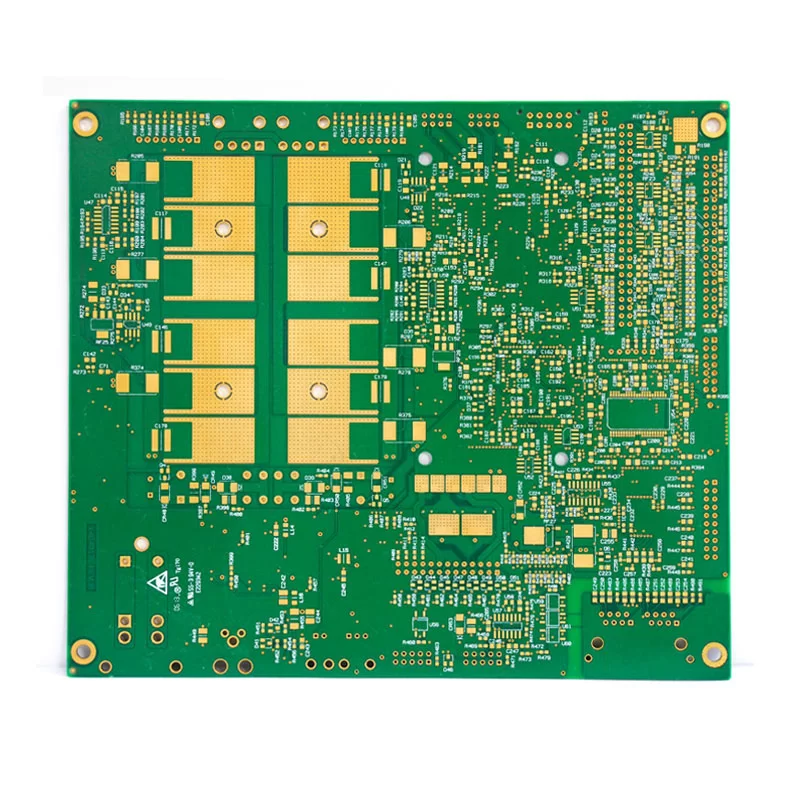
Choosing the Right Specialty Material PCBs (Teflon, Glass Epoxy or High-Quality IMS)
Modern electronic engineers constantly face the friction between maintaining signal integrity at high frequencies and managing extreme thermal outputs in confined form factors. Whether you are developing next-generation telecommunications infrastructure or designing heat-intensive automotive electronics, relying on standard substrates often leads to catastrophic field failures, impedance mismatch, and delayed product launches. Navigating these thermal and frequency challenges requires more than just a standard circuit board; it requires a tailored substrate strategy.
HUB Circuits steps into this gap as your definitive manufacturing partner. By focusing on rapid prototyping and high-mix, low-to-medium volume fabrication, we eliminate the bottlenecks typically associated with sourcing advanced substrates. Our one-stop fabrication and assembly services are explicitly designed to handle high-frequency and high-density interconnection (HDI) demands. Certified to ISO 9001 and recognized by UL for stringent safety and quality management, we ensure that your critical medical, industrial control, and telecom applications are built on a foundation of uncompromising reliability.
Engineering Standards for Specialty Material PCBs (Teflon, Glass Epoxy or High-Quality IMS)
Achieving zero-defect fabrication requires rigorous adherence to precise engineering tolerances. When dealing with complex substrates, the margin for error is non-existent. Below is an overview of how our fabrication facility aligns with global benchmarks to deliver unyielding performance.
| Performance Metric | Industry Significance | Our Engineering Standard | Advantage |
|---|---|---|---|
| Dielectric Constant (Dk) Control | Crucial for high-frequency telecommunications and RF signal integrity. | Advanced Teflon/PTFE fabrication with strict impedance tolerances. | Prevents signal loss and phase shift in high-speed data transmission. |
| Layer Density & HDI Routing | Drives miniaturization in medical devices and industrial controls. | 1 to 32 Layers capable, utilizing high-Tg Glass Epoxy with fine line width/spacing. | Enables highly compact, lightweight, and complex circuit architectures. |
| Thermal Dissipation | Prevents overheating in high-power automotive electronics. | Precision-machined Aluminum base boards (High-Quality IMS). | Expedites heat transfer, dramatically extending component lifespan. |
| Manufacturing Compliance | Ensures consistent product safety and global market access. | ISO 9001 quality management and UL-recognized safety protocols. | Guarantees regulatory compliance and reduces auditing friction. |
Maximizing ROI with Specialty Material PCBs (Teflon, Glass Epoxy or High-Quality IMS)
Investing in advanced substrate technology is not merely a technical decision; it is a strategic maneuver that significantly impacts your bottom line. Utilizing the correct materials directly correlates to reduced warranty claims, lower field-replacement costs, and accelerated time-to-market. By leveraging HUB Circuits’ capability for short lead times and comprehensive one-stop services, hardware teams can iterate rapidly during the prototyping phase and transition seamlessly into low-to-medium volume production.
This streamlined approach minimizes vendor-management overhead and mitigates supply chain risks. As demonstrated in the data below, upgrading to targeted substrates yields a measurable increase in overall thermal efficiency and signal reliability, ultimately driving down the total cost of ownership across the product lifecycle.
Related products

Top Selling Products
Choosing a Reliable PCB Manufacturer for High Performance Electronics
Comprehensive Guide to Printed Circuit Board Design and Fabrication

123456Modern Printed Circuit Board Design and Global Manufacturing Trends123123123