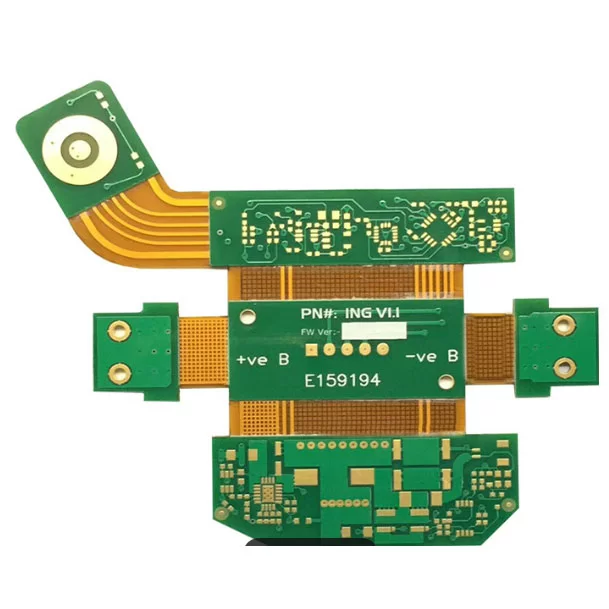
The modern digital era is built upon a foundation of intricate circuitry, where the Printed Circuit Board serves as the central nervous system for almost every electronic device we touch. From the smartphone in your pocket to the complex control systems of an autonomous vehicle, these boards enable the precise routing of electrical signals, ensuring that components communicate seamlessly to perform complex tasks.
Understanding the nuances of PCB design and fabrication is no longer just for electrical engineers; it is critical for product designers and procurement specialists who aim to optimize for reliability and cost. As devices shrink in size but grow in power, the demand for high-density interconnects and specialized materials has transformed the industry into a high-stakes arena of material science and precision engineering.
By mastering the selection of the right substrate and assembly process, companies can significantly reduce time-to-market and eliminate costly field failures. This guide explores the global landscape of the Printed Circuit Board, offering a deep dive into its technical core, diverse applications, and the future trends shaping the electronics manufacturing industry.
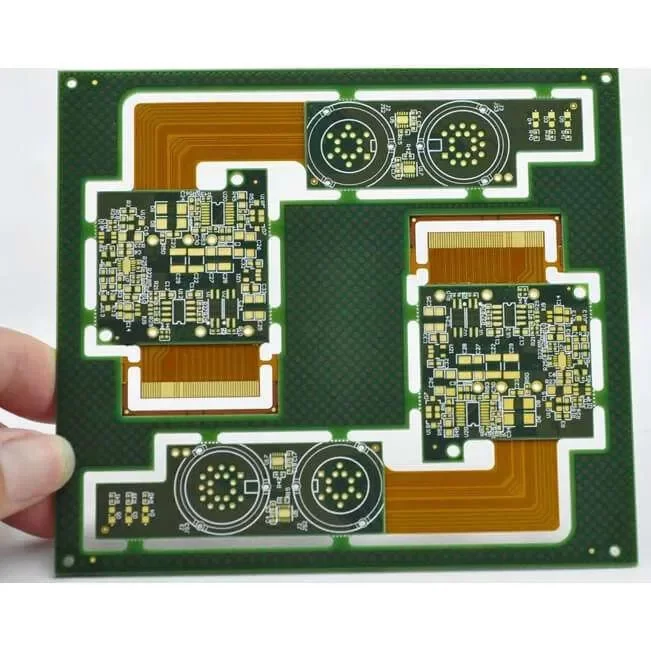
Global Significance of Printed Circuit Boards
On a global scale, the Printed Circuit Board industry is a primary driver of the Fourth Industrial Revolution. According to industry data and ISO quality standards, the shift toward miniaturization and IoT integration has led to an exponential increase in the complexity of board layouts. The global supply chain relies on these components to power everything from critical medical imaging devices to the massive servers that sustain the cloud computing infrastructure.
However, this reliance creates a significant challenge: the "complexity gap." As we push for 5G connectivity and AI-driven edge computing, traditional PCB fabrication methods often struggle to maintain signal integrity and thermal management. This has forced a global shift toward HDI (High Density Interconnect) and specialized substrates to prevent system failures in mission-critical environments.
Defining the Core Mechanics of PCBs
In its simplest terms, a Printed Circuit Board is a non-conductive substrate—usually fiberglass or ceramic—upon which conductive copper pathways are etched to connect electronic components. Unlike point-to-point wiring, which is prone to error and bulky, a PCB provides a standardized, repeatable platform that ensures electrical signals reach their destination with minimal interference.
From an industrial perspective, the PCB is more than just a mounting plate; it is a sophisticated piece of engineering that manages power distribution and signal timing. The integration of multilayer structures allows designers to stack circuits on top of one another, separated by insulating layers called prepregs, enabling the creation of incredibly dense and powerful electronic systems within a small footprint.
This technology addresses a fundamental humanitarian and industrial need: the democratization of electronics. By allowing for mass production through automated assembly (PCBA), the cost of essential technology—such as diagnostic medical tools in remote clinics or smart irrigation sensors in developing agricultural zones—has plummeted, making life-saving and efficiency-boosting tools accessible globally.
Critical Factors for High-Performance PCBs
Durability is the foremost concern when designing a Printed Circuit Board for industrial use. Environmental factors such as extreme temperatures, humidity, and mechanical vibration can lead to solder joint fatigue or substrate delamination. Utilizing high-Tg (Glass Transition Temperature) materials ensures that the board remains structurally sound even when subjected to the intense heat generated by high-power components.
Signal Integrity and Scalability are equally vital. As clock speeds increase, electromagnetic interference (EMI) becomes a critical failure point. By implementing strategic ground planes and utilizing specialized materials like Rogers or Teflon, engineers can ensure that high-frequency signals travel across the Printed Circuit Board without degradation, allowing the system to scale from a simple prototype to a complex mass-market product.
Finally, Cost Efficiency must be balanced with reliability. The choice between a standard FR4 material and a more expensive ceramic or metal-core PCB depends entirely on the application. For consumer electronics, cost-optimization is key; however, for aerospace or medical applications, the "cost of failure" outweighs the initial material expense, making premium, high-reliability substrates the only logical choice.
Global Applications and Sector Use Cases
The application of the Printed Circuit Board spans every modern industry. In the automotive sector, the transition to Electric Vehicles (EVs) has spurred a demand for high-voltage Motor Power PCB Assemblies that can handle massive current loads while remaining lightweight. Similarly, in the medical field, Rigid-Flex PCBs are utilized in wearable health monitors, allowing the circuitry to bend and contour to the human body without breaking.
In remote industrial zones, such as oil rigs or deep-sea mining operations, ruggedized PCBs are deployed to withstand corrosive atmospheres and extreme pressure. These boards often feature specialized conformal coatings to protect the circuitry from salt spray and chemical exposure, ensuring that critical monitoring systems remain operational in the most inhospitable environments on Earth.
Performance Comparison of PCB Substrate Types
Tangible Advantages and Long-Term Value
The primary advantage of adopting a professional Printed Circuit Board strategy is the drastic increase in reliability. By replacing manual wiring with etched traces, the risk of short circuits and intermittent connections is virtually eliminated. This provides a logical safety net for critical systems, where a single loose wire could lead to catastrophic failure in an aircraft or a medical ventilator.
Beyond the technical specs, there is an emotional value tied to innovation and trust. When a company utilizes high-tier PCB assembly, they are essentially investing in the dignity of their end-user by providing a product that "just works." This reliability fosters brand loyalty and trust, as the consumer feels the security of knowing the device is engineered to last, rather than being a disposable piece of electronic waste.
Future Innovations in PCB Technology
The future of the Printed Circuit Board is leaning heavily toward sustainability and "Green Electronics." We are seeing a rise in biodegradable substrates and additive manufacturing (3D printed electronics) that reduce chemical waste during the etching process. These innovations are critical as global policies shift toward a circular economy, requiring electronics to be easier to recycle.
Digital transformation is also pushing the boundaries of PCB design through the use of AI-driven routing. Machine learning algorithms can now optimize trace paths to reduce EMI and heat hotspots more efficiently than a human engineer, leading to boards that are smaller, faster, and more energy-efficient. This automation is key to the rapid deployment of 6G and advanced AI hardware.
Furthermore, the integration of embedded components—where resistors and capacitors are placed inside the board layers rather than on the surface—is becoming more common. This "embedded" approach further reduces the board's footprint and improves signal speed, paving the way for the next generation of ultra-compact wearables and implantable medical devices.
Overcoming Modern Fabrication Challenges
One of the most persistent challenges in Printed Circuit Board manufacturing is thermal management. As components become more powerful, they generate more heat in a smaller area. The solution lies in advanced thermal vias and the use of Metal Core PCBs (MCPCB), which act as integrated heat sinks to pull thermal energy away from sensitive chips and dissipate it into the environment.
Another hurdle is the increasing difficulty of inspecting high-density boards. With traces measured in microns, traditional visual inspection is impossible. The industry has responded by adopting Automated Optical Inspection (AOI) and 3D X-ray imaging, which allow manufacturers to detect internal voids in solder joints or microscopic cracks in the substrate before the product ever leaves the factory.
Finally, supply chain volatility remains a risk. To overcome this, leading firms are adopting "Design for Manufacturing" (DFM) principles. By simplifying the board design to use more common materials and standard component footprints, engineers can avoid being bottlenecked by the shortage of a single specialized material, ensuring a steady flow of production.
Comparison of PCB Fabrication Solutions for Common Industry Challenges
| Challenge Dimension | Traditional Approach | Innovative Solution | Impact on Reliability |
|---|
| Heat Dissipation | External Heat Sinks | Metal Core PCBs | High (Reduces Throttling) |
| Space Constraints | Standard Multilayer | HDI / Microvias | Medium (Higher Density) |
| Signal Noise | Standard FR4 | Rogers/PTFE Materials | Very High (Low Loss) |
| Flexibility Needs | Cable Harnesses | Rigid-Flex Integration | High (Less Connector Failure) |
| Quality Control | Manual Sampling | 3D X-Ray / AOI | Very High (Zero Defect) |
| Environmental Wear | Plastic Enclosures | Conformal Coating | High (Corrosion Proof) |
FAQS
A PCB (Printed Circuit Board) is the bare board consisting of the substrate and the copper traces. PCBA (Printed Circuit Board Assembly) is the complete finished product where all electronic components (chips, resistors, capacitors) have been soldered onto the PCB. While the PCB is the "skeleton," the PCBA is the "living organ" that actually performs the electronic functions.
FR4 is the industry standard for most applications due to its balance of cost and performance. However, if your application involves extreme heat (e.g., LED power drivers) or requires high thermal conductivity and vacuum stability, Ceramic PCBs are the superior choice. Ceramic offers much better heat dissipation and stability in harsh environments but comes at a higher price point.
Vias are small, plated holes that allow electrical signals to move between different layers of a multilayer PCB. They are critical for creating dense circuits; without vias, you would be limited to a single-layer board. Through-holes go all the way through, while blind and buried vias are used in HDI boards to save space and reduce signal interference.
Yes. Eco-friendly PCBs are developed using halogen-free laminates to reduce toxic emissions during incineration. Additionally, the industry is moving toward lead-free soldering (RoHS compliance) and experimenting with bio-based resins for the substrate. Designing for "end-of-life" recycling—where components are easier to remove—is also a growing trend in sustainable electronics.
Industrial-grade PCBs are typically designed for a lifespan of 10 to 20 years. Their longevity depends on the quality of the materials used (like high-Tg FR4) and the environmental protections applied (like conformal coating). Regular thermal cycling and vibration are the main factors that degrade PCBs over time, so high-quality fabrication is essential for long-term durability.
HDI (High Density Interconnect) uses microvias and finer lines, allowing more components to be packed into a smaller area. This shorter distance between components reduces signal travel time (latency) and minimizes parasitic capacitance, which directly leads to faster processing speeds and lower power consumption in devices like smartphones and high-end laptops.
Conclusion
The Printed Circuit Board remains the indispensable heart of the electronics world, evolving from simple conductive paths to highly complex, multilayered systems. By balancing durability, signal integrity, and cost-efficiency, manufacturers can create products that are not only technically superior but also sustainable and reliable. From the adoption of HDI technology to the integration of green materials, the industry continues to push the boundaries of what is possible in miniaturization and performance.
As we move toward an AI-driven future, the strategic selection of PCB materials and fabrication processes will be the deciding factor in product success. We encourage engineers and product owners to prioritize "Design for Manufacturing" (DFM) to ensure their visions can be scaled efficiently without compromising quality. To explore professional PCB assembly and fabrication services tailored to your specific industry needs, visit our website: www.hubcircuits.com