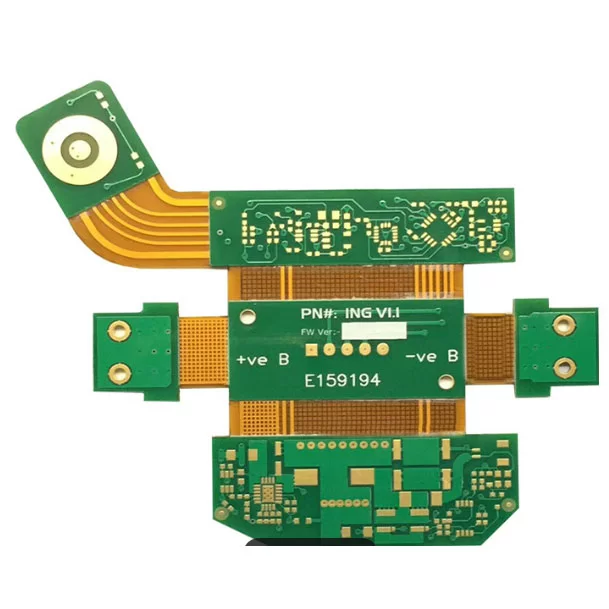
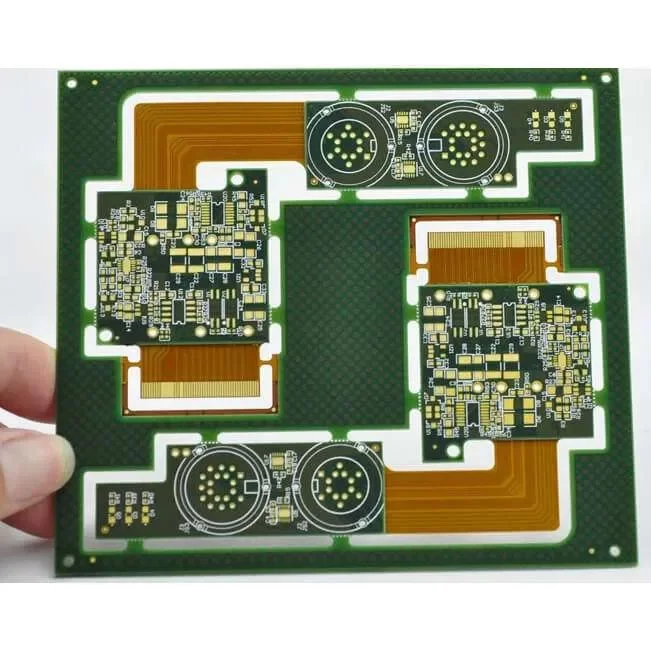
The modern technological landscape is built upon the invisible yet intricate architecture of the Printed Circuit Board. From the smartphone in your pocket to the complex control systems of autonomous vehicles, these boards serve as the nervous system of electronic devices, enabling the precise routing of electrical signals and the secure mounting of components. Understanding the nuances of PCB design and manufacturing is no longer just for engineers; it is essential for any business aiming to innovate in the hardware space.
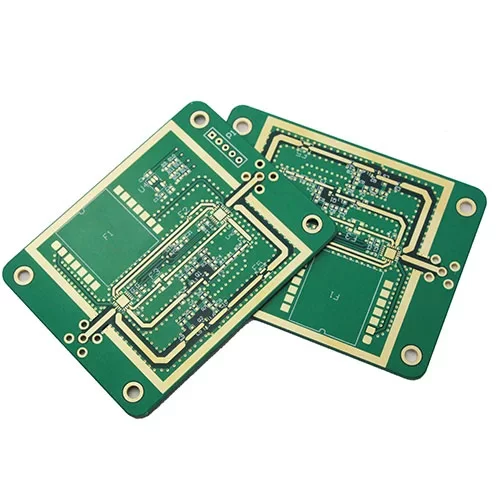
Globally, the demand for high-performance circuitry is skyrocketing as we enter the era of 5G, AI-driven edge computing, and the Internet of Things (IoT). The ability to shrink components while increasing processing power depends entirely on the evolution of the Printed Circuit Board. As industries shift toward miniaturization and higher thermal efficiency, the materials and methods used to create these boards must evolve to prevent system failures and ensure long-term reliability.
By mastering the selection of substrates, layer counts, and assembly techniques, companies can significantly reduce time-to-market and lower production costs. Whether it is a simple single-sided board for a consumer toy or a complex HDI (High Density Interconnect) board for a medical imaging device, the quality of the Printed Circuit Board determines the ultimate success and safety of the end product.
Global Context of Printed Circuit Board Technology
On a global scale, the Printed Circuit Board industry is a cornerstone of the electronics manufacturing sector. With the rapid acceleration of digital transformation, ISO standards for electronics quality have become more stringent to ensure that circuitry can withstand extreme environments. Data from industry analysts suggest that the proliferation of "smart" infrastructure is driving a compound annual growth rate that forces manufacturers to pivot toward more sustainable, lead-free materials and high-frequency substrates.
However, this growth comes with significant challenges. The global supply chain often struggles with the volatility of raw material costs, such as copper and specialized resins. Furthermore, the push for smaller, faster devices creates a "thermal wall," where traditional board materials cannot dissipate heat effectively. Solving these bottlenecks requires a deep integration of material science and precision engineering to ensure that every Printed Circuit Board can handle the increased power densities of next-generation chips.
Defining the Modern Printed Circuit Board
At its most basic level, a Printed Circuit Board is a non-conductive substrate—usually fiberglass or ceramic—upon which conductive copper pathways are etched to connect electronic components. Unlike point-to-point wiring, which is prone to error and bulky, the PCB provides a standardized, repeatable method for creating complex electrical circuits. This stability is what allows mass production of electronics to be both affordable and reliable.
In the context of modern industry, the Printed Circuit Board has evolved from a simple mounting plate into a complex multi-layered device. Modern boards often feature "vias" (plated holes) that allow signals to travel between different layers, effectively creating a 3D electrical network. This evolution is critical for humanitarian needs, such as the development of low-cost medical diagnostic tools and portable water filtration controllers used in remote regions.
Ultimately, the meaning of a PCB in today's world is "connectivity." It is the physical manifestation of a logical schematic. By translating complex mathematical algorithms into physical copper traces, the Printed Circuit Board enables everything from the simplest LED flashlight to the most advanced satellite communication systems, bridging the gap between theoretical design and tangible functionality.
Core Components of PCB Performance
Durability is the first pillar of any high-quality Printed Circuit Board. This involves the selection of the base laminate—such as FR-4 for general use or Polyimide for flexible applications—and the application of a solder mask to protect the copper from oxidation and short circuits. A durable board ensures that the device can survive vibration, humidity, and temperature swings without the traces cracking.
Scalability and Signal Integrity are where the Printed Circuit Board truly proves its value in industrial settings. By utilizing HDI (High Density Interconnect) technology and micro-vias, designers can pack more functionality into a smaller footprint. This is essential for "scaling up" a prototype into a consumer product without sacrificing the speed of signal transmission or introducing electromagnetic interference (EMI).
Cost Efficiency and Manufacturability (DFM) are the final critical factors. A well-designed Printed Circuit Board is one that is optimized for the assembly line, reducing the number of manual soldering steps and minimizing material waste. When design rules are strictly followed, the cost per unit drops significantly during mass production, making advanced technology accessible to a wider global audience.
Global Applications and Use Cases
The application of Printed Circuit Board technology spans every conceivable industry. In the automotive sector, the shift toward Electric Vehicles (EVs) has created a demand for heavy-copper PCBs that can handle high current for battery management systems. Meanwhile, in the aerospace industry, ceramic PCBs are utilized for their extreme heat resistance, ensuring that flight controllers remain operational even under intense thermal stress.
In more specialized contexts, such as post-disaster relief operations, ruggedized PCBs are used in satellite phones and portable power grids to provide communication in areas where traditional infrastructure has collapsed. In remote industrial zones, such as deep-sea mining or arctic exploration, these boards are coated in conformal resins to protect them from corrosive saltwater or freezing temperatures, proving that the Printed Circuit Board is the foundation of resilience in extreme environments.
Performance Metrics for Different Printed Circuit Board Types
Long-Term Value and Reliability
The long-term value of investing in a high-grade Printed Circuit Board extends far beyond the initial purchase price. High-reliability boards reduce the "Total Cost of Ownership" (TCO) by minimizing field failures and warranty claims. For critical systems—such as medical ventilators or industrial power plants—a single trace failure can lead to catastrophic outcomes. Therefore, the logical choice is to prioritize premium materials and rigorous testing protocols.
From an emotional perspective, reliability builds trust. When a consumer buys a product, they are buying the confidence that it will work every time they press a button. This trust is physically anchored in the quality of the Printed Circuit Board. By ensuring safety and consistency, manufacturers don't just sell a product; they provide peace of mind and uphold the dignity of the user by delivering a tool that performs its intended function without fail.
Future Trends in Circuit Innovation
The future of the Printed Circuit Board is leaning heavily toward sustainability and "Green Electronics." We are seeing a rise in biodegradable substrates and recyclable conductive inks that reduce the environmental impact of e-waste. As global policies shift toward a circular economy, the ability to recover precious metals from old PCBs will become as important as the manufacturing process itself.
Technologically, the integration of 3D-printed electronics is set to revolutionize how we think about boards. Instead of flat layers, we may soon see "embedded" components where the Printed Circuit Board and the components are printed as a single, monolithic structure. This would drastically reduce the size of devices and eliminate the need for traditional soldering, which is often the weakest point of a circuit.
Furthermore, the rise of AI-driven design automation is streamlining the layout process. Machine learning algorithms can now optimize trace routing for the best possible signal integrity and thermal distribution, tasks that used to take human engineers weeks to perfect. This synergy between AI and Printed Circuit Board fabrication is accelerating the pace of innovation across all digital sectors.
Common Challenges and Engineering Solutions
One of the most persistent challenges in Printed Circuit Board design is Electromagnetic Interference (EMI). As clock speeds increase, traces can act like tiny antennas, leaking signals into other parts of the board. Engineers solve this by implementing "ground planes"—solid layers of copper that shield sensitive signals and provide a stable reference voltage, ensuring the device operates cleanly without erratic behavior.
Thermal management remains another hurdle. As components get smaller, the heat they generate becomes more concentrated. The solution involves using thermal vias—copper-plated holes that conduct heat away from the component and into a heat sink or a metal-core substrate. By treating the Printed Circuit Board as a heat exchanger rather than just a conductor, engineers can push hardware to its absolute performance limits.
Finally, the complexity of assembly can lead to "cold solder joints" or bridging, which cause intermittent failures. The industry has moved toward Automated Optical Inspection (AOI) and X-ray inspection to catch these defects before the product leaves the factory. This rigorous approach ensures that every Printed Circuit Board meets the exacting standards required for modern professional electronics.
Comparison of PCB Material Solutions for Industry Challenges
| Challenge Type | Recommended PCB Material | Implementation Method | Effectiveness Score (1-10) |
|---|
| Extreme Heat | Alumina Ceramic | Direct Bonded Copper (DBC) | 10 |
| Signal Latency | Rogers High-Frequency | Controlled Impedance Traces | 9 |
| Space Constraints | Polyimide (Flex) | Foldable Circuit Design | 8 |
| EMI Noise | FR-4 with Copper Plane | Multi-layer Shielding | 7 |
| Moisture/Corrosion | Standard PCB + Epoxy | Conformal Coating | 9 |
| Cost Reduction | FR-4 Glass Epoxy | Panelization Optimization | 10 |
FAQS
A PCB (Printed Circuit Board) is the bare board containing the copper traces and substrate without any components. PCBA (Printed Circuit Board Assembly) is the completed board after all electronic components—such as resistors, capacitors, and integrated circuits—have been soldered onto the PCB. Essentially, the PCB is the foundation, and the PCBA is the finished, functional electronic module.
Material choice depends on your application's environment. Use FR-4 for standard consumer electronics due to its cost-effectiveness. For high-frequency RF applications, materials like Rogers are preferred. If your device needs to bend or fit in a tight, irregular space, Flex PCB (Polyimide) is the best choice. For extreme heat, ceramic substrates provide the necessary thermal conductivity and stability.
Vias are small, plated-through holes that act as electrical conduits between different layers of a multilayer Printed Circuit Board. They are crucial because they allow designers to route complex circuits in a compact space without crossing traces on the same layer. Without vias, we would be limited to single-layer boards, making modern smartphones and computers physically impossible to build.
Not necessarily. Multilayer boards allow for higher component density and better signal integrity, but they are more expensive and complex to manufacture. For simple devices like a power strip or a basic LED controller, a single-layer PCB is more cost-effective and perfectly sufficient. The "best" board is the one that meets the technical requirements at the lowest sustainable cost.
Preventing Electromagnetic Interference (EMI) involves several strategies: using dedicated ground and power planes to shield signals, keeping high-speed traces short and direct, and separating analog and digital components. Additionally, using differential pair routing and adding decoupling capacitors near power pins can significantly reduce noise and improve the overall stability of the circuitry.
Industrial-grade PCBs are designed to last 10 to 20 years, depending on the operating environment. Their longevity is ensured through the use of high-Tg (glass transition temperature) materials, gold plating (ENIG) to prevent corrosion, and conformal coatings to protect against moisture and dust. Regular thermal management and quality assembly are key to reaching these long-term reliability goals.
Conclusion
The Printed Circuit Board remains the unsung hero of the digital age, transforming complex electronic theories into reliable, mass-producible hardware. From the selection of advanced materials to the implementation of high-density interconnects and rigorous thermal management, every detail in the PCB lifecycle contributes to the overall performance and safety of the end product. By balancing cost-efficiency with high-reliability engineering, manufacturers can create devices that not only innovate but endure.
As we look toward a future of sustainable electronics and AI-integrated manufacturing, the role of the Printed Circuit Board will only become more critical. We encourage engineers and product developers to embrace green substrates and automated design tools to stay competitive in a rapidly evolving market. For professional PCB fabrication and assembly services that prioritize precision and reliability, visit our website: www.hubcircuits.com.